Showing posts with label Mailbag. Show all posts

Monday, April 14, 2014

Mailbag: Clearing the Air Anthropologically

I noticed that there are, in addition to the things already discussed, a few questions regarding some of the things I've said having to deal with anthropology; thus, I decided it'd be best if I made another short mailbag post to clear the air.

The first two questions are responding to my post on "Lewontin's Fallacy" and Race, but since these (unlike what I'm used to) are constructive and very clearly objective, I'm going to reply to them despite my having ended any discussion on that post. First:

"Ms. Delanoir, I noticed that on your post on Lewontin and Race, you said that the general scientific consensus is in support of the Out of Africa hypothesis. This really isn't true anymore (although it may have been back in 2010 or 2011). Indeed, anthropologists do support the multiregional hypothesis, which is not to be confused with the candelabra model. Is this why you were confused?"

This email is two things: (A) completely correct; and, (B) a great talking point. It is entirely true that the most up-to-date data in anthropology supports the multiregional hypothesis. The difference between these two hypotheses is that Out of Africa supported the large-scale replacement hypothesis, in that it suspected that modern humans who migrated out of Africa replaced the existing human populations such as the Denisovans and the Neanderthals with little-to-no intermixing involved; however, recent evidence suggests the contrary, that some populations can have as much as 4% Neanderthal admixture. I actually had a brief discussion with somebody on my debate page comments regarding this. These findings do support a multiregional hypothesis (not a candelabra model) because the multiregional hypothesis suggests a series of migrations and back-migrations with substantial intermixing with existing human populations, thus resulting in a widespread, complicated network of human interaction and gene flow.

Often times, I conflate the multiregional hypothesis with the candelabra model for online debates because, considering who I'm debating against, they often do not know the difference, and if I were to tell them I supported the multiregional hypothesis but still believed human race does not exist, they would not understand why. Interestingly enough, the implications of the multiregional hypothesis suggest that Neanderthals and Denisovans are of the same species as Homo Sapiens, but perhaps different subspecies or races. That hurts the debate a little.

But, I'm willing to accept that I was incorrect in my framing of the debate, and I apologize to anyone who I misled. Knowing now that there are legitimate interest readers who look into the true science of what I write about on occasion, I'll do my best to improve my writing so that it is factually accurate, not socially convenient.

Next question.

"Alexis,
First, I would like to thank you deeply for your contributions to fighting race revival. Sometimes I look back on the progress we've made in anthropology and think 'where did we go wrong?' In any case, I just have a few minor comments.
You spent a little bit of time defending your citation of both Lewontin and Gould (in separate posts), and I'm just wondering if there's a specific reason you're doing so. In all honesty, even I acknowledge in this debate that citing Lewontin or Gould is kind of remedial, and I often look at it and think 'is that all you got?' There are many other, much more recent authorities and studies to cite that effectively prove the same point. One good place to start would be with this article:
http://www2.webmatic.it/workO/s/113/pr-1400-file_it-Barbujani-Colonna.pdf
If you're interested in more, let me know!"

I defend my support of Lewontin and Gould for different reasons. Lewontin's research was genuinely the birth of research which would serve to debunk traditional racial categories at the genetic level. Gould was rejected by many scientists in the last decade because of the Morton-Gould War. Neither Lewontin nor Gould deserve to be rejected, but of course, we need more recent and relevant data to defend our position.

Since I want to keep this short, I'll only include one more question:

"I noticed that a lot of issues you're having with people in the race debates have to deal with this mistaken idea that human behavior and phenotypes can be predetermined by their genes. Do you think that there's some inherent human nature that we cannot overcome?"

You know, when I hear the phrase "human nature," I and many people in the field of anthropology let out a heavy sigh and put our fingers in between our eyes in frustration; but then, the words of Tim Ingold echo in my ears, and not only is my headache put at ease, but in all honesty, the eloquent phrasing of Ingold's argument makes my heart throb a little:

"Human capacities are not genetically specified but emerge within processes of ontogenetic development. Moreover the circumstances of development are continually shaped through human activity. There is consequently no human nature that has escaped the current of history.

[...] This does not mean, of course, that a human being can be anything you please. But it does mean that there is no way of describing what human beings are independently of the manifold historical and environmental circumstances in which they become–in which they grow up and live out their lives."

If you asked anthropologists today what their favorite quote was, I think many of them would pick this one out. The suggestion that a person, or a society's culture can be predetermined by their genes is absolutely ridiculous.

Thank you all for your input. Look forward to more


Follow me on social media!

Twitter: https://twitter.com/AlexisDelanoir
Google+: https://plus.google.com/+AlexisDelanoir0/
YouTube: https://www.youtube.com/AlexisDelanoir

Thursday, April 3, 2014

Mailbag: It's All About Me

Welcome to the last insertion of this three-part mailbag series! This doesn't mean I won't do any more mailbag posts anymore -- I definitely plan on doing more in the future if I get enough emails. Sorry that it took me so long to get to this post, I've just been busy with school and a small project I was working on with a friend of mine. Now that I'm here, let's get this show on the road!

By the way, somebody asked me about this via email, and I wanted to clarify:

Many of these emails were not submitted intentionally as questions for my blog. Many were sent to me as regular emails looking for conversation, and I asked the senders' permission to include them in this post. I may get a bit of traffic on my blog, but nowhere near enough that I get so much mail just asking me questions.

So, with that being said, let's answer some of those questions.

"Alexis, I saw your exchange with [name censored] on YouTube and your mentioning of how you grew up as a Protestant but turned to atheism. Care to talk about that at all? Also what is your view now on theists?"

There's a certain point in every child's life where they start to question the things they were taught, and I suppose it comes around age 10 or 11 at first where we begin to develop our autonomy. The big game changer in my life, on that note, would be when I started questioning the existence of God. I won't talk much about the transition, but I'll say that I'm glad there were already people who considered the potential arguments I had, because it would've been difficult to come to those conclusions on my own. In the end, it sparked my interest in science: knowledge in thermodynamics, genetics, and basic scientific discourse were all necessary to fully grasp the arguments being made on either side.

As far as how I view theists now, I don't mind. For many people, as I've said in the past, it can serve as a good basis for morality, although many ideas are questionable (e.g. opposition to homosexuality). However, theism becomes a problem when it interferes with one's ability to learn well-established facts. We've known evolution to be true for a long time now, yet according to the Gallup polls, 46% of people don't believe in it. That's far too large of a number, and that's where I find a problem with theism.

I also find a problem with theism when it's imposed. People such as [name censored] actively argue against evolution and the Big Bang theory, claiming that they're false, have no evidence, and that God is the truth. This is intentionally spreading misinformation, because these individuals haven't taken the time to learn the facts, and yet assert them as though they're so knowledgeable of all the material that they can safely say "it's a lie." When the facts are presented, they reject them. So, you can sum up the type of theists I reject in two categories: (1) militant theists; and, (2) science denialists. Even science denialists, though, can be tolerated if they just keep it to themselves.

Next question?

"Do you have a boyfriend yet, Lex? - John"

And please welcome that friend of mine I mentioned earlier: John! No John, I don't have a boyfriend yet.

"Why not?"

Yes, he actually asked that without me having given him a response to the first one.

I'm not interested in anybody new at the moment (people who are close to me know what that means). I'm also not sure what kind of person I would be interested in. I've thought about this idea before: a unique conversation. If I can have a conversation with somebody that is entirely unique, in that I've never had anything close to that type of conversation before, and if that conversation is inspiring, then perhaps I have a unique connection with that individual. This is just an idea, though, I'm not going to go drooling over a guy/girl just because they said something completely unprecedented to me.

Speaking of which:

"HtPYP,
I've seen you defend the idea of homosexuality before, and I'm wondering: is it because you're homosexual? There's nothing wrong with that, I'm just asking if you have a specific reason."

I defend homosexuality because I think people should be able to choose how they want to live without being forced into some other social norm by another person; however, as I suggested in the above paragraph, I'm not heterosexual. I identify as pansexual, which simply means that I don't see gender as being of significance in finding a partner; or rather, that I see the idea of a male-female relationship as being a social construction which is irrelevant in my own personal decisions. I hope that makes sense.

A few people have asked me different questions about my life, but one in particular asked me many of those questions in one email, and numbered, so I'll just answer them like that:
"Alexis, can I ask several questions?
1: You seem really really smart, how did you do in school? You don't need to say specific grades, but can you share GPA or class rank?
2: What instruments do you play?
3: Where did you learn to draw/paint/Photoshop?
Thanks!
Angela"
1: Aw, thank you. My unweighted GPA was a 3.94, and my weighted was a 4.13. I was fourth in my graduating class. Now, with this being said, I want to say something to anyone who might be reading this and thinking badly of themselves.

In my opinion, GPA and class rank mean barely anything in terms of how intelligent you are. I took some AP classes, and they helped to boost my weighted GPA up, but most of my classes for my unweighted GPA were just me slacking off. My class rank, then, was based on that. I can probably say that in the four years of my experience being in high school, the only time the top 5 people deserved to be in the top 5 was my junior year. There was one boy who worked his butt off night and day, expending any potential for a social life, to get into the top 5 in his class for a scholarship. He ended up being salutatorian; valedictorian was granted to somebody who, unfortunately, was well-known as a cheater. I don't consider myself to be anything special by having these numbers. They're just numbers.

Same goes for the SAT/ACT.

2: I have experience in a lot of instruments, and I "know" how to play a lot, but I'm only good with a few. For the ones I actually know how to play, if I were to order them from most experienced to least, it would be: piano, violin, guitar, bass guitar, drums, harp. I barely know how to play harp, and I only kinda know how to play drums. Piano and violin are my life. Guitar and bass guitar are pretty good, but they were just things I picked up on the side.

3: For drawing and painting, I went to weekly art classes starting at a young age (around 8 if I recall correctly) and I stopped going when I graduated high school (age 18). I honed my painting skills in my classes in college, and I taught myself how to Photoshop via online tutorials and general trial and error.

Alright, I've ranted enough. Last email? Let's make it a good one!

"Anti-racist is just a codeword for anti-White."

(I know, I couldn't resist).

No, anti-white is just a codeword for anti-racist.

Now seriously, last email from the mailbag:

"Ms. Delanoir,
I read your biography and saw that you've lived in New Jersey (US), Shinagawa (JP) and Toronto, Ontario (CA). Which do you like the best?"

That's a really tough question. It's great to live where I do now, in Toronto, because my house has a great view, it's big, and it has a backyard covered over my trees, which gives a great atmosphere. The city sucks, though. The US has a lot of great memories for me -- it's where my childhood is, and I miss the ocean. Shinagawa was amazing, and in general Japan was exciting. I didn't mind the hustle and bustle of Tokyo, I loved my trip to the beach while I was in Japan, and overall it was just an awesome experience.

So, I would have to say this:

New Jersey is best because of nostalgia.
Toronto is best because of the quality of my living.
Shinagawa is best, in general, as a place to live.

My answer to your question, then, would probably be Shinagawa.

Thanks to everyone for their questions! I'm putting the mailbag away for now, but feel free to keep sending me emails, and I'll do another one in the future!


Follow me on social media!

Twitter: https://twitter.com/AlexisDelanoir
Google+: https://plus.google.com/+AlexisDelanoir0/
YouTube: https://www.youtube.com/AlexisDelanoir
Thursday, March 27, 2014

Mailbag: When I'm Not Blogging

Many of you have been very interested in what I do outside of posting things on my blog -- I love it! Make sure to send me more, okay?

First question:

"Lex,
I absolutely love the work you've displayed in your gallery thus far, but you haven't put up anything new recently. Same for your music. Why is that? Is your work on hiatus for some reason?
~ Elliot"

I'm glad you've been keeping up with my work, Elliot! My art/music isn't exactly on hiatus, just that I've been feeling uninspired concerning my piano pieces and I haven't done anything worth posting on my gallery; however, that should change within the next few days or so. I'm working on a digital art piece (maybe two!) that I'll be uploading soon. I'll be sure to update my blog with it as well. I may push that date back, however, because I have one more mailbag to post after this.

Otherwise, thank you so much for your support. It's always nice to have the support of veteran artists. I'll try to compose something on my piano within the month of April, but no promises.

Next question?

"Hi Alexis, I noticed that your description poses you as a student researcher as well as an artist/musician, but aside from your essays, you haven't really mentioned anything about actually doing research at your university. You also seem too young to be a student researcher. Do you have an explanation for any of this?"

It's kind of complicated. When I call myself a student researcher, I'm usually referring to my private research essays. That being said, I actually am an undergraduate researcher, which answers the question of why I'm so young. Undergraduate researchers do less invasive research, and usually it's less exciting. It's mostly about replicating findings that are already well supported.

One example of this would be a few months back. I was supposed to be involved in an experiment with one of my professors involving RNAi of Cycloidea. During the month that I had been offered to participate in this experiment, I was throwing myself into a surge of urgency to try to do a bunch of things to make myself feel more important (yes, I know, that's pathetic). However, a friend of mine has worked with me in testing the fluidity of IQ, and we're both working on a long-term case study of a single individual's intelligence (unnamed).

I'll be doing more research once I obtain my degree. Then I can focus on one field as opposed to two, one of which takes up most of my time. (You feel me, art majors?)

"You talk about a lot of things. What's your favorite topic?"

Straight to the point! Hnn... Personal topics -- the moments where I get to sit down and answer questions like these. It's far less stressful, and I'm sure a lot of you like this form of me better than the raging alcoholic that attacks people who disagree with me.

"I've seen you around on YouTube arguing against people on a variety of topics, but at the same time, I see how stupid many of them can be. Why do you even bother?"

Funny you should mention that, because as I'm typing up this post, I'm concluding an argument with a creationist on YouTube over the debate between Dawkins and Lennox. It can be irritating at first, yes, and many of them can be stupid; however, after a point... isn't it kind of funny to see what people resort to when there's nothing left for them to say?

There are other reasons, though, for why I waste my time in the Den of Deception:

(1) In some cases, I genuinely believe I can change someone's life by offering them information they weren't aware of.
(2) It's good practice for legitimate debates.
(3) It motivates me to dig deep and research topics I like.
(4) It helps promote my blog. (I know, sneaky right?)

So, I guess YouTube arguing isn't all that useless and time wasting.

Last question:

"Dear Alexis,
When you've got no homework to do, nothing to do online, and are just sitting in your room without cause, what do you do?"

I either lie in the grass on my front lawn, looking out at the stars or the horizon (my home has a nice view of the mountain range), or I climb one of the trees in my backyard and play guitar, or just sit there and take a nap. It's more relaxing than you could ever imagine.

That's all for now, ladies and gents. Stay tuned for the last mailbag, and then I'll get back to the typical things I talk about on my blog.


Follow me on social media!

Twitter: https://twitter.com/AlexisDelanoir
Google+: https://plus.google.com/+AlexisDelanoir0/
YouTube: https://www.youtube.com/AlexisDelanoir

Tuesday, March 25, 2014

Mailbag: Race, Gene Clusters and Wright's FST

About a week ago, the storm over my most recent post on race finally settled down, and I found myself with a bit of peace. Then I received this email:

"It seems that you are censoring comments on both of your posts on race, and so I thought I would send you this email with my thoughts on the discussion. It seems to me that you are playing a semantics game over racial classification. I could talk about gene clusters and morphological characteristics that easily correlate with our traditional idea of race, but to sum it up, I sympathize with this commenter:
'In other words, they evolved differently, but we shouldn't be calling them different races anyway because liberals get butthurt... Great argument against race, no doubt. You can call them populations, I'll call them race - same thing.'
Ignoring the political rhetoric, this commenter has the right idea. By the very nature of what a category is, if we can find that there are several characteristics which correlate with our traditional understanding of race (i.e. Europeans are much more likely to have light skin, light hair, light eyes, certain tooth shape, skull shape, etc.) then even if there are occasional overlaps, those categories are useful and cannot be ignored. This is why it seems, to me, that there is not much scientific reason to deny race. You fully acknowledge that certain people evolved in certain ways to adapt to their environments, such that Europeans became different from East Asians, but you somehow say that these groups cannot be called races? That convinces me you are not scientifically motivated.
Furthermore, in one of your comments on YouTube, you stated that in order to be classified into subspecies, an animal must have an FST of 0.25 - 0.3. This is a common mistake cited by race deniers. There is no set requirement for FST to be classified into subspecies because of the errors in estimating FST, and because it is arbitrary to set any certain requirement. There are plenty of subspecies which have been identified which have an FST of lower than 0.25. There is no set rule, so despite humans having an FST of around 0.15, classifying them into subspecies is just fine.
I hope you will give me an honest response.
- S.T." 

Should I give up, or should I try explaining again? (I'm kidding of course -- I only act this way because I think I know who sent the email, and that's what makes it funny).

First of all, the biggest warning sign that I can be given in these discussions is, right off the bat, being accused of censorship. The accusation isn't entirely untrue, but it isn't perfectly descriptive either. I control the comments that come into my blog because I write on controversial topics from time to time, and thus am inevitably going to receive comments that are NSFW. I don't want that, although I don't go ape over people swearing on my blog either -- I'm rather liberal when it comes to those sorts of things. I do like to keep the discussions in check, though. Anyone who freely comments on my blog can attest to this: if you have something worth saying, you can take the time to type it somewhat cordially so that I can permit it; otherwise, it's not getting published.

Aside from that, however, when a comment doesn't introduce any new arguments (and by this, I mean the answers to their arguments are given in the post or in other comment responses), then it's not worth my readers' time to publish that comment. This is just to avoid repetition.

However, in some cases, something can be repeated so many times in so many different ways. This leads me to believe that the question is in need of an extensive reply, such as the one I am about to provide. So, without further ado, let's get to the substance of S.T.'s email. S.T. states that he sympathizes with this comment from my post on Lewontin's Fallacy and Race:

"In other words, they evolved differently, but we shouldn't be calling them different races anyway because liberals get butthurt... Great argument against race, no doubt. You can call them populations, I'll call them race - same thing."

Had S.T. continued to read on, he would have seen my reply to this commenter:

"Yes, some people 'evolved' differently from others. I say this because humans are still evolving, and it seems we will be for some time to come. Again, this doesn't warrant biological classification beyond the point of subspecies. "Race" and "geographic population" are not the same thing. The significance of studying geographic populations is in observing the population's interaction with its environment."

This is a little vague due to the fact that I had to condense it to have a more comment-appropriate length. It also doesn't directly respond to the argument that if multiple characteristics or genes correlate with an identifiable group, then that group is meaningful in nature, and in this case, these groups can be classified as races; more so, my reply argues against the conflation of population with race. The former, more or less, is what S.T. and the commenter he quoted were arguing. In any case, I probably would've ignored this email had I not received several of the same nature:

"Alexis,
If you scientifically believe races do not exist in the human species, please explain how we can look at gene clusters which express for morphological differences or otherwise in populations and accurately classify them into groups?"

"I think it's dishonest to say that typically, a subspecies classification requires a 0.25-0.30 FST, or that this applies to race. Plenty of subspecies have been identified which do not have such a high FST, and in fact have a substantially lower FST than humans. I'd suggest you look at this chart:
http://occidentalascent.files.wordpress.com/2013/12/fsthe3.png?w=640&h=625
To clarify, I don't believe you're dishonest, just that you're misled, by the way. You seem very intelligent."

Thus, I have decided that it is worth responding to in whole. This will be a two-part response: (1) don't gene clusters imply that we can classify race; and (2) since other subspecies have been classified with a lower FST than 0.25, doesn't that mean it works just fine with humans?

The first part is a little ignorant. If I were to compare the elk population in Alberta to the elk population in Ontario and conducted an Analysis of Molecular Variance (AMOVA) and found their FST to be 0.01, that means that only 1% of the variation which exists can be explained by between-population differences. Now, within this 1%, there may be a cluster of a few genes which almost always correlate to the elk population we took our sample from. Let's say it's a set of 25 genes. Around 95% of the time, allele A of these genes is exclusive to the Albertan Elk, and allele B is exclusive to the Ontarian Elk. The logic of what is being suggested is that because this difference exists, even though there is only a 1% difference between these two populations, we can classify them into subspecies, or race, or deme, or whatever classification below the level of species you prefer.

Since elk in Washington tend to be fatter, they're obviously a new subspecies.
So, even if the FST of humans were 0.003, if that 0.3% of variation contains alleles which almost always correlate with our traditional understanding of race, then those races are meaningful classifications in the context we're discussing. By this logic, I could divide Americans from the north and Americans from the south into different races; or, as I have suggested previously, I could identify a few dozen different races in India. The issue is not whether or not there are differences. The issue is whether or not the large majority of these differences can be best explained by our traditional racial classifications. Scientists have largely found that it is not so.

The second part is a bit trickier. There are probably subspecies that have been identified which have an FST of lower than 0.25. The general rule, as I've been taught, is that 25% between-population differentiation warrants separate classification. There are always going to be exceptions to these rules, because science itself needs to be somewhat flexible in order to account for things we don't fully understand. In these cases, we would look at the Albertan Elk and Ontarian Elk and see if there are other differences. Are they geographically separated, or do they regularly move between the borders of Alberta and Ontario? Do they have distinct ecology -- does one only eat a certain type of plant, or display a different social structure?

The different "races" of humans are not so distinct. We can all adapt to living in a different society than where we grew up in without too much difficulty. We are all capable of eating the same foods, for the most part (I'm aware that, for example, lactose intolerance occurs at higher rates in some populations). We show little genetic distinction from one another (more recent estimates suggest that our differences are in the range of 3% to 7% as opposed to the 15% I usually cite). Based on our current understanding of human variation, race is not the best classification we can use.

More over, the chart that was cited in the third email I received was an interesting one. It has been cited before on my blog -- specifically, it was cited by the person that the first emailer referred to. I know which website it came from, but specifically I don't know who created it. I guess it's safe to assume that the author of that website probably made it, but I wonder if it came from a journal article instead. Either way, there are many things that I find funny/interesting about the chart, and I think I'll be discussing those things in a separate post in the near future. For now, my general explanations are what I have to offer.

What other emails have I received regarding the debate over race?

"Alexis,
In your review of Stephen Jay Gould's 'The Book of Life,' you suggested that he was some kind of phenomenal scientist that was revolutionary to his field. This is where you're wrong, and I'm guessing this is where you received much of your education on human racial differences. Libertarian Realist did a good video on this in response to c0nc0rdance, who I see you're subscribed to on Youtube. Funny, huh?
 Stephen Jay Gould was charged with intellectual dishonesty for his book 'The Mismeasure of Man' due to his anti-racism, much like you. He accused Samuel Morton of intellectual dishonesty and bias in his calculation of cranial capacities; however, when Lewis et al. remeasured the sample from the original study, they found that Morton was completely accurate, and if anyone was biased, it was Gould.
You can find Janet Monge's interview on the matter here: http://www.youtube.com/watch?v=9oE_mVLH8fU"

Recently, HannibaltheVictor13 on YouTube made a video response to this, and if you don't like how I say things, maybe you'll like him. You can find his video here.

Otherwise, I'll continue to respond.

Stephen Jay Gould's original thought of Morton was, yes, that Morton was a racist and that he may have shown his bias in his calculations. The direct criticism, however, was that Morton had not controlled for sex or stature of the skeletons that he observed, and that he omitted certain skulls to fit his preconceptions of racial categories, and all of this skewed the results. In their study, Lewis et al. made the same mistake Morton did and failed to control for sex or for stature. In fact, Lewis et al. failed to remeasure the entire collection -- they remeasured about half of it.

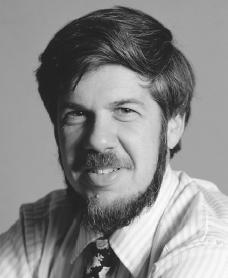
S.J.G. -- a man who is a great evolutionary biologist.
At the same time, it's funny that this email should mention and refer to Janet Monge. She was one of the researchers in the Lewis et al. study, and she is also the curator of the Physical Anthropology Section of the University of Pennsylvania Museum of Archaeology and Anthropology; this is where the skull collection is held and was being held at the time of the study. The skull collection at the University of Pennsylvania is impressive, and the university wanted to publicly promote this collection in pride. When Stephen Jay Gould criticized the measurements of the skulls in the collection, and Janet Monge responded by participating in a study to respond to Gould's criticisms, funded by the University of Pennsylvania, she immediately triggered a conflict of interest. In the study, the authors declared no competing interests. Thus, as it stands, Gould's original criticisms were intellectually sound, and the criticisms of the Lewis et al. study remain brushed under the carpet.

But either way, the flaw with this criticism of Stephen Jay Gould (one which Libertarian Realist took part in) is that it's fallacious. Stephen Jay Gould, even if he had incorrectly criticized Morton, was a great scientist, and his work was phenomenal. One fault in his addressing of human variation, specifically race, would not destroy all of the other contributions he's made to science.

This concludes this mailbag post. The next one will be about more personal questions I've received regarding my life, not my work.

Thank you all for reading.


Follow me on social media!

Twitter: https://twitter.com/AlexisDelanoir
Google+: https://plus.google.com/+AlexisDelanoir0/
YouTube: https://www.youtube.com/AlexisDelanoir