Thursday, January 30, 2014

"Lewontin's Fallacy" and Race

[Read before you post! If you comment with a rebuttal that has already been addressed either in the post or in the comments section, your comment will not be approved, and I will most likely bar you from future discussion. If you can't take the time to read the content you're responding to, then you're not welcome on my blog. This is your warning.]

[Note: Spawktalk a.k.a. Sean Last has written a rebuttal to this article for The Right Stuff. You can check it out here. I have opted not to reply since most of the points have been responded to in the comments section of this post, but I would still recommend reading his response, and I've written a reflection on our exchange here.]

I was going to make my next post a work by my father, but since this took me so long, and since my dad encouraged individuals to "do as they see fit, not as they are expected," I went ahead with this post anyway. This is something I've wanted to talk about for a very, very long time, but did not get a legitimate excuse to do so; so, a fair warning: In this post, I will not thoroughly explain the sources I cite (although I can by request), because this post will already take a long time. Instead, I'll include the in-text links as I usually do and continue with my explanation, unless it really is reliant on me to include details of the links I include.

A commenter on one of my other posts asked me a question in regards to something called “Lewontin’s Fallacy” in light of my page on the debate between Sam Owl and LaughingMan0X. In all honesty, in my research of anthropology (and in the nearly a year I’ve spent formally learning the facts), I’ve only ever seen "Lewontin’s Fallacy" mentioned in online arguments. I will still address it, but much more extensively than anticipated. This is a very complex subject, so in order to fully understand the nature of Lewontin’s findings on human genetic variation, I will need to explain the nature of the argument for racial classification for humans, and show why Lewontin, despite committing a fallacy, was actually correct, and where that takes us in the modern realm of anthropology. First, let’s identify what “Lewontin’s Fallacy” actually is, respond to it, and then we will get into the much broader topic. I do this only to satisfy the request of the commenter before rambling on in a subject he or she may not be concerned about looking into at the moment.

"Lewontin's Fallacy" was coined by A.W.F. Edwards in a paper criticizing Richard Lewontin's research in human genetic diversity, specifically his paper "The Apportionment of Human Diversity" from 1972. In this study, Lewontin used single locus analysis to find the fixation index score (or FST) for human beings; in other words, to find what degree of variation there is within human populations and between human populations. He stated that 15% of variation exists between populations, while 85% exists within populations. He concluded, based on this, that the proposal that human races exist is unscientific and meaningless.

A.W.F. Edwards
Edwards's argument was that because Lewontin only uses single locus analysis, he ignored what is largely the consideration for human genetic variation, which would be genetic clusters or multiple loci. By observing genetic clusters, you can find that there are correlations between racial categories and common geographic regions in some cases. Most people cite Rosenberg et al. (2002) or similar studies to substantiate this claim, but this is a gross misrepresentation of the data. Rosenberg et al. tested 1,052 people from 52 populations and used the data in a computer program called Structure. The program asks for a specified cutoff -- how many groups do the researchers want? The researchers actually, with the data they had available, could assign anywhere between 2 and 20 groups. Now, in one discussion I had over this topic, someone pointed out that this is actually a common problem in machine learning -- determining how many clusters are in a data set. This, however, only concedes to the point that genetic cluster analysis does not validate an objective definition of race, because you have to arbitrarily determine what the cutoff is, and what overlaps you're going to ignore in order to determine a degree of dissimilarity. Machine learning should not be the end of scientific inquiry, especially in these cases, because such results still retain a degree of arbitration; one that has to be discussed theoretically and via analysis. I'll get to this later. The 2002 study, if anything, is not evidence for biological race, but evidence that race is a social construction. In fact, in Rosenberg et al. (2005), they state: "Our evidence for clustering should not be taken as evidence of our support of any particular concept of 'biological race.'"

The reality is, genetic variation exists at a continuum across geographic regions (meaning there are no discrete genetic categories). Many anthropologists stop here and say: "if there are no discrete categories, race cannot usefully be applied to humans." Many counter that this is a fallacy of the beard, but therein lies the problem that in human variation, there are no extremities.

"Fallacy of the beard" refers to an analogy about the status of one's beard. The argument would suggest that because you cannot assign a differential category between 100 hairs on a beard from 102 hairs, or so on, that statuses of beard lengths (can be simple as long/short, or can refer to things like five o' clock shadow) do not exist. The reason this is not the case is because beard lengths have extremities, such as being completely clean shaven, implying that while nominal in nature, the partitioning of such categories of beard status rely on the 'number of hairs' in a ratio level of measurement, where there is a meaningful zero (lack of any hairs). This cannot be done for human genetic variation.

Furthermore, for those of you who are looking to defend your stance on race using the information in this post, I would be very wary when people use this argument, because it's actually a clever strawman that you may not catch immediately. Here is another example of how the continuum fallacy goes, from the Wikipedia page:

Q: Does one grain of wheat form a heap?
A: No.
Q: If we add one, do two grains of wheat form a heap?
A: No.
[...]
Q: If we add one, do one hundred grains of wheat form a heap?
A: No.
Q: No matter how many grains of wheat we add, we will never have a heap; therefore, heaps don't exist!

That last line is where the argument may slip you up. Anthropologists, by and large, do not take the position that race does not exist, but instead that race is subjectively classified, and relies more on the societal context you find it as opposed to any real biological differences. Race does exist, it's just subjective; therefore, arguing that this is a continuum fallacy is a strawman, and cannot be applied.

There are some important facts to note here. Although Lewontin drew his conclusion hastily from his premise (that because humans have more variation within than between populations, then races don't exist), genetic studies have upheld his findings for the most part. In fact, Lewontin's premise wasn't inaccurate at all. The average FST of humans does tend to be between 0.05 and 0.15 (although the Rosenberg study sets it at a smaller number, and the Excoffier/Hamilton study sets it at a larger number, the number I refer to is what is generally accepted and is not up for much debate). His "more variation within than between" finding continues to be echoed in the field of anthropology not for the conclusions that he drew, but for the fact that he did successfully fixate the populations of humans on the index. Lewontin's "fallacy" was not in the fixation index, but the conclusion he drew from it -- that races don't exist. No anthropologist really denies the empirical findings of Lewontin's research, but the debate over the existence of objectively defined human races still continues to this day.

There is variation. Now what?
The argument now is in the hands of anthropologists. There exists approximately 15% variation
between human populations, so what does this mean for race? Are these genetic differences significant or not? For the rest of this post, I will be applying the information I have mentioned above to a larger topic: the extent, the pattern, and the meaning of variation in modern humans, as well as historic attempts to understand this diversity. This will take a long time, so I encourage my readers to be patient and feel free to come to and from this post as frequently as what makes you feel comfortable.

Firstly, in terms of evolutionary time, 60 kya (about 60,000 years) is a very short time. That's the estimate that we generally use for the age of modern humans. Starting 60,000 years ago, anatomically modern humans began to expand and occupy every region of the planet, leading us to where we are today. The world is very ecologically diverse, and so various human populations encountered different ecological and climatic conditions. The extent of how far modern human migration has gone can easily be seen in places such as (let me use the expected example) Toronto. This type of diversity comes primarily from our current period of time.

Attempts to understand human diversity go back thousands of years. Yet, one of the first "scientific" attempts to classify humans according to their physical characteristics was by Carolus Linnaeus, who we now know as the founder of modern taxonomic classification. He invented the binomial classification system of genus/species that we continue to use to this day. Once again, this was an effort that goes back thousands of years. For this reason, it's very instructive to review Linnaeus's early classifications of humans based on their observable characteristics. In 1758, Linnaeus essentially used the following classifications and descriptions for each:

Americanus: reddish, choleric, and erect; hair black, straight, thick; wide nostrils, scanty bearrd; obstinate, merry, free; paints himself with fine red lines; regulated by customs

Asiaticus: sallow, melancholy, stiff; hair black; dark eyes; severe, haughty, avaricious; covered with loose garments; ruled by opinions 

Africanus: black, phlegmatic, relaxed; hair black, frizzled; skin silky; nose flat; lips tumid; women without shame, they lactate profusely; crafty, indolent, negligent; anoints himself with grease; governed by caprice

Europeaeus: white, sanguine, muscular; hair long, flowing; eyes blue; gentle, acute, inventive; covers himself with close vestments; governed by laws
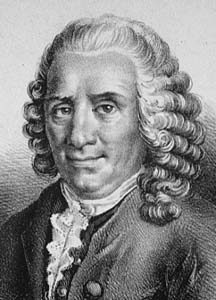
 
Carolus Linnaeus
Already, it may have struck you that there are many issues with the Linnaen classification of humans. Firstly, he relies on superficial facial/cranial traits such as skin color, hair color, eye color, and so on. In addition, the broadly defined groups rely on the 18th century Eurocentric preconceptions of surrounding regions, with culturally loaded classifications as well. It is based on perception of the groups from that period of time, and from the perspective that Linnaeus had as a Swedish scientist. At the same time, as I noted to one of my professors, it seems that the Linnaen classification of humans may have been influenced by his experience as a botanist -- he categorized humans, as it seems, according to obvious physical characteristics, and then by attempting to observe how they interact with the environment they're found in. Feel free to disagree with this observation, but now, most of us (with the exception of Eurocentrics) see Linnaeus's classification as being pretty ridiculous, but it has taken us a long time to get where we are today in objectively analyzing the classification of human groups.

Similarly, in 1775, Johann Friedrich Blumenbach submitted his thesis for his M.D. entitled De generis humani varietate nativa (or, On the Natural Variety of Mankind). He is now considered to be the father of physical anthropology, and with good reason. Blumenbach, like Linnaeus, assigned to humans five categories representing their types:

Mongolian (yellow)
American (red)
Caucasian (white)
Malayan (brown)
Ethiopian (black)

In classifying these, Blumenbach used a more biological approach in contrast to Linnaeus. At the same time, Blumenbach rejected the notion of multiple human origins, and also rejected the notion of African inferiority from an anthropological perspective. He also recognized the continuous nature of human variation. This is why we consider him to be the father of physical anthropology: his findings have been the basis for studies in this field of science to this day. However, as I said, the classification of human races still remains in debate.

To understand this debate, we have to ask "what is race?" This can be problematic because the term means different things to different people; for some it has a strict biological meaning, for some a cultural meaning, and for some a combination of the two. Here, we will try to observe it strictly by its biological validity. There comes an issue, however: how can we define race in a narrow biological sense? Do these races exist in humans? Can race usefully explain the biological variation found in humans?

The term "race" was officially coined by Comte de Buffon, a French naturalist, in 1745, but one of the first scientists to use the term "race" in its modern context was the French physician and traveler Francois Bernier in his 1684 publication Nouvelle division de la terre par les différentes espèces ou races qui l'habitent, or New division of Earth by the different species or races which inhabit it. Here we see that he used "species" and "race" as being somewhat synonymous, so how will we define it knowing what we do in the modern realm of anthropology?

AAA and others: thank you for your hard work.
Race could be defined as "unambiguous, clearly demarcated, biologically distinct groups." It could also be defined as "a division of a species that differs from other divisions by the frequency with which certain hereditary traits appear among its members." Do either of these definitions apply to humans? If we use the former definition, the American Anthropological Association (AAA) made a statement on the existence of human races. In addition, the American Association of Physical Anthropologists (AAPA) made a statement as well. Lastly, the Human Genome Project (HGP), the largest and probably one of the most significant projects undertaken to decode the human genome, one which will be remembered in the scientific community for centuries, also released their statement on the existence of human race/ethnicity.

There are many reasons why the AAA, the AAPA and the HGP came to these conclusions. As we have established, races are, by definition, discrete and unambiguous units of classification which are used to explain variation which is mostly continuous in nature. It's important to note, before continuing, that evolution is very complex, and there are many different factors that can influence that variation. The variation in humans, and any species of animal, can be described with their interplay with evolutionary factors.

Consequently, racial classifications can't explain, in any meaningful way, the variation observed in human populations -- this is why there has never been any true agreement among anthropologists on the number of races, from three to several dozen. Before half of my audience pulls up their mouse and diverts to the comment section, this does not mean I am denying that there is biological variation in humans. As Relethford stated in 2002, "biological variation is real; the order we impose on this variation by using the concept of race is not." We are not all the same, the variation is undeniably there; however, creating descriptive categories for humans fails to explain the complex reality of human variation.

Let me use the example of skin pigmentation. There are simplistic views as alluded to above: red, yellow, white, brown, black. Then there is the more complex, realistic view: there is going to be a huge range of variation in skin tone, and there will inevitably be overlaps between groups. The traits that have traditionally been employed to classify humans in "racial" groups are anthropometric traits (primarily skin color, facial features, shape and size of head and body, underlying skeleton, etc. as shown by the Linnaen classification, for example). However, anthropometric traits are strongly influenced by the environment and are subject to natural selection, which may be acting in different ways for different traits. This being said, natural selection acts in specific genomes, thus different traits often shown remarkably discordant geographical distributions.

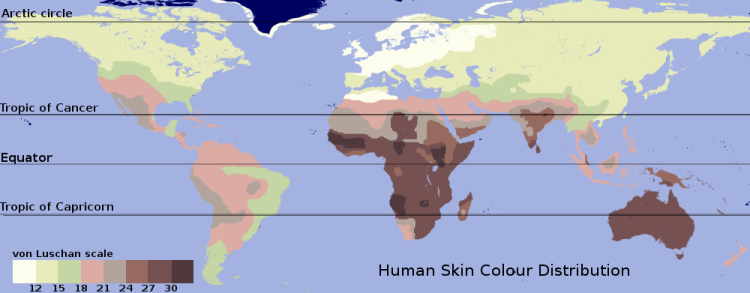
Once again, I will divert to skin pigmentation. In the bottom map, the darker regions have darker skin, and the shade gradually becomes lighter as you move north in latitude; in the top map, you see the distribution of the A allele in the ABO blood group. As you can see, the distribution of skin pigmentation is much different from the distribution of the A allele of the ABO blood group. When you think about it, this isn't all that surprising. Remember, there are multiple different factors driving allele frequency change; mutation, gene flow (and isolation by distance), genetic drift, natural selection, etc. To fully understand this, we need a brief overview of how this evolution works.

Genetic drift and gene flow are evolutionary factors which affect the entire genome. However, at the same time, forces such as natural selection affect only a subset of loci -- in the case of skin pigmentation, the genes involved in the synthesis of melanin. Thus, different traits (and at the genetic level, different loci) can have very different evolutionary histories. So if the concept of race doesn't work usefully for humans, how can we study, in a meaningful way, the biological variation observed in our species?

As detailed, the current study of human variation is an evolutionary one. We try to understand how different evolutionary factors have shaped the diversity of our species. This approach has to be very flexible, since there are many ways to proceed depending on which evolutionary questions we want to answer. Now, we will identify different ways anthropologists study human variation.

Some researchers study human variation at the level of local populations; for example, studies of the social structure and genetics of South American Indians of the rain forest. Other anthropologists study human variation at the level of global major geographic regions; for example, in the most relevant case of Lewontin, studying the patterns of variation within and between major continental groups. We will soon get into the significance of Lewontin's findings, but for now, let us consider two more examples.

Many anthropologists attempt to understand population history using as many traits as possible; for example, studies of gene flow in New World populations. Others are primarily interested in specific traits, trying to understand how evolutionary factors have shaped the variation in those traits in human populations. We have already discussed an example of this: the study of the distribution of skin pigmentation genes and their evolutionary history.

These are examples of the different ways in which anthropologists can study human variation. For decades, anthropologists have tried to answer two important questions related to this topic: what is the extent of variation in human populations, and how is this variation distributed (are there many differences between major geographic groups)? The answers to these questions can be found by studying our DNA.

In spite of the seemingly high variation observed in humans for some anthropometric traits (skin color, shape/size of head/body, etc.), humans show little-to-moderate variation at the genetic level, as alluded to earlier. It is particularly interesting to contrast the genetic diversity observed in humans with that of our closest relatives, the great apes. It turns out that at the DNA level (Y chromosome, mtDNA, and autosomes) humans are much less diverse than the great apes. Consider the chart on the right that I pulled from an anthropology textbook, illustrating the diversity that exists within our populations using Watterson's diversity estimator. It shows that at the genetic level, humans have a diversity level of about 7.5, while chimps lie at 24, gorillas 15, and orangutans 25. Why is there so little variation in humans compared to our hairy relatives?

As briefly mentioned earlier, most molecular anthropologists and human geneticists think that the low diversity observed in humans is due to our recent origin. Anatomically modern humans are a young species, so the level of diversity is relatively low. In addition, there is evidence indicating that humans went through a severe bottleneck in their history -- in other words, the human population was reduced to a few thousand people; however, not everyone agrees about the origins of anatomically modern humans (the very large consensus up until now has supported the Out of Africa hypothesis, but recently the multiregional hypothesis [not to be confused with the candelabra model] has found favor among many anthropologists, including myself; I won't get into this now, I simply wish to identify the two most significant sides of the debate).

But now that we've gone into general perspective of variation of humans, we can get into variation within and between, as promised. We have seen that at the genetic level, humans show less variation than the great apes. There are other important questions regarding human variation, however:

- How is the variation distributed?
- How much variation exists within our populations?
- How much variation exists between, particularly at the continental level?

For this, let's review the evidence at the DNA level and see if we can find an answer.

To measure variation within and between populations, the most common statistic is the fixation index, or FST. FST measures the amount of differentiation between groups or populations. An example is the picture shown on the left. It explains the basic mechanisms of calculating the variation between vs. within populations. In humans, there are few genetic markers that have huge genetic differences between populations.

Now, we move on to our guest of honor again. One of the first researchers to estimate the relative degree of genetic variation within and between human populations was Lewontin in 1972. Since his original study, many more have been carried out, using different methodologies and different genetic markers. All of these studies generally show that the percentage of genetic variation between continental groups is only a small percentage of the total variation -- most of the variation is found within populations. As stated earlier, numerous studies indicate that the percentage of genetic variation between continental groups only accounts for about 5% - 15% of the total. Again, this is probably due to the recent origin of our species, plus the effect that gene flow has had in shaping our genetic diversity.

But how do we interpret the results? How can we reconcile the obvious differences we observe in anthropometric traits between human populations with the low values observed at the genetic level? This, apparently, would be a contradiction, but it isn't so. Consider again the factors driving human evolution. Although most traits show very small differences between human populations, some traits can show large differences, particularly those subjected to strong diversifying selection. To help you understand this better, let's clarify some important points.

The estimate of variation between human populations (FST = 0.05 - 0.15) is an average value. The dispersion of FST values around the mean is wide. While the majority of markers show low FST values (FST = <0.15), some markers can have large FST values, and the results of such studies of genetic markers can and will vary. When you can, take a closer look at the FST distribution of
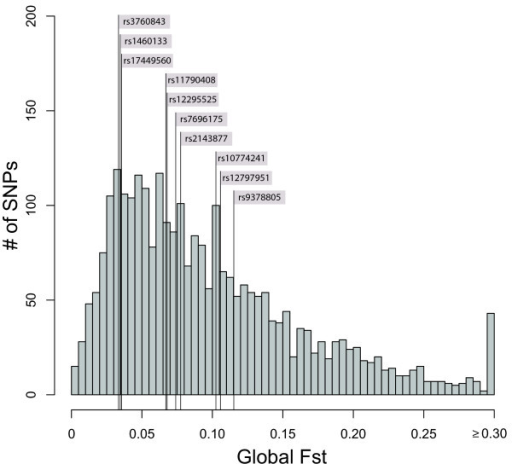
Only 2,750 markers, but you can still see the wide variation.
approximately 10,000 markers in the human genome. Remember, the reality is almost always more complex than we think. You can see that although most markers show small differences between human populations, the distribution around the mean is very wide. Some of the traits showing large differences between populations are the traits that have traditionally been used to infer racial classifications. Those traits do not represent the average picture at the genomic level, and thus even if we could somehow agree on racial classifications for humans, it would not be very meaningful, because it would not help us understand the large majority of human genetic variation.

Typological racial classifications do not capture the complex pattern of diversity found in human populations. Humans show low genetic diversity in comparison with great apes. Most of the genetic variation found in humans is within populations. In addition to mutation, gene flow, genetic drift and natural selection has also actively shaped our genome, so that for some markers and traits, the differences between populations can be larger than the average (diversifying selection), and for others, the differences may be smaller (stabilizing selection). We are only beginning to understand how these different evolutionary factors have shaped the diversity of our species, but as much as we understand, racial classification is not a useful way to help us to do this; thus, the topic of racial classification, although still much debated, tends to be pushed aside for more useful, productive discussions of explanations for the genetic variation we find in the human species.

In the end, Lewontin may have committed a fallacy by concluding all of this from the premises he had, but he ended up being right regardless.

Thank you for reading.

*For supplementary reading, I recommend looking at the module set by the General Anthropological Division of the American Anthropological Association: http://www.aaanet.org/committees/commissions/aec/gad_module_2.pdf

I would also recommend "Race Reconciled: How Biological Anthropologists View Human Variation."


Follow me on social media!

Twitter: https://twitter.com/AlexisDelanoir
Google+: https://plus.google.com/+AlexisDelanoir0/
YouTube: https://www.youtube.com/AlexisDelanoir


ResearchBlogging.orgEdwards, A. (2003). Human genetic diversity: Lewontin's fallacy. BioEssays, 25 (8), 798-801 DOI: 10.1002/bies.10315  

Lewontin, R. (1972). The Apportionment of Human Diversity. Evolutionary Biology DOI: 10.1007/978-1-4684-9063-3_14

Rosenberg, NA. (2002). Genetic structure of human populations. Science.

Tuesday, January 28, 2014

Canadian Health Care and Why Americans "Can't Politics"

In this post, I will be discussing common misconceptions of the Canadian health care system. Perhaps the title of this post is too generalizing and offensive, but allow me to defend my position. Anyone in America who watches the news somewhat frequently knows of the arguments I will be referring to, and many of you will be aligned with this sort of thinking. At the same time, I acknowledge that the vast majority of Canadians who are familiar with our health care system do not need to be informed of these facts, although they may be familiar with the debate in America, and that many Americans are also not aligned with these thoughts. My goal here primarily is to address individuals residing in America who have been socialized with the misinformation being passed around in their common media about Canada's health care system, and similar systems in general. Hopefully I can successfully unhinge a few people from their fears of a single-payer health care system.

As I said above, I acknowledge that most Canadians know the facts already, but this goes into a deeper issue within this topic, and is quite relevant. In November of 2009, Nanos Research conducted a poll of 1,005 Canadians by telephone to find their opinions of our health care system. It was found that 79.9% give their endorsement of the health care system, while about 10% are still somewhat supportive, amounting to a general ~90% approval rating. The strongest approval rating was 83% in Ontario, my province, while there exists no significant regional variation. Please note, before I continue, that this is the unqualified opinion of Canadian citizens, not professionals in the medical field. We'll get to that later.

This same poll asked a question about the Canadian citizens' opinion of United States President Barack Obama's endorsement and pursuit of a public health care system. 71.3% expressed that they believe Barack Obama is "on the right track," while only 7.3% stated disapproval. The rest were unsure, which is to be expected. Again, the highest rate of approval was found in Ontario.

So everyone can see the specific results.
So now that we've established that most Canadians approve of public health care, I want to take a moment to be fair to the other side. Most Americans will refer to the fact that Canadians evidently report of extreme waiting times for procedures and operations. The same poll conducted above asked two specific opinionated questions. The first question asks what Canadians think is the key strength of our health care system. 61.4% answered that it was free public health care that was accessible to everyone. The second question asked what we think is the weakest aspect. Consistent with the opposition's claims, 32.7% responded that waiting times/lack of accessibility were the biggest issues. Note, this does not mean that 32.7% of Canadians believe there are outrageous waiting times -- just that if they had to pick, this would be the primary issue.

Waiting times are not the only factor that might lead Canadians to come to America to receive health care. Canada is actually behind in terms of new technology for certain procedures, such as cranial tumors or brain injury. Sometimes hospitals are in more convenient locations as well for Canadians living close to the border, and American hospitals, as it seems to me, are generally superior, especially because of the greater numbers in staff.

However, despite these contentions, it doesn't imply that the article linked at the beginning of this post is assuming correctly. In fact, all of the possibilities I listed above have been found to have little-to-no effect on Canadians traveling outside of Canada for medical treatment. A study conducted by Katz et al. in 2002 examined Canadians traveling to the United States for such purposes. They used data from the National Population Health Survey (NPHS) to find survey responses to two questions. The first question asked if the respondent received medical care in the United States during the past twelve months of their response. If the respondent answered "yes," the next question asked if they went to the United States primarily for such services.

They also collected data by contacting, via telephone, all ambulatory care facilities located in the United States close to the Canadian border in densely populated areas. The reason for this was to get the most accurate response, since it is assumed that if Canadians were to go to the United States for medical treatment, they would choose a location close to Canada. They asked key informants within these institutions for the number of Canadians they had seen in the prior year, and to indicate any significant trend.

Lastly, they contacted statewide hospital discharge data from 136 ambulatory care facilities in New York, Michigan and Washington, asking how many Canadians they admitted into the hospital according to admission status (and not by coincidental activity). They also selected for "America's Best Hospitals" to find a relevant trend. The results were as follows:

Approximately 40% of facilities contacted had seen no Canadians in the prior twelve months, 40% had seen fewer than ten, 15% had treated 10 - 25 patients, and 5% reported seeing more than 25 (although none reported seeing more than 100, the number was generally between 25 and 75). If we extrapolate the data, there were 640 Canadians who received treatment for diagnostic radiology services and 270 patients for eye procedures in America over that year. However, in British Columbia over a 5-year period, there were 80,000 and 25,000 procedures respectively, and for Quebec, 375,000 and 44,000 procedures respectively. It is important to note that this comparison is extrapolated, and the comparison is between two five-year periods and the study's one-year period; however, at the same time, we must consider that the comparison is only being made to two regions of Canada.

In the three states observed for hospital discharge data, ~4,500 Canadians received treatment; however, approximately 80% of such treatment was related to pregnancy.

For the NPHS results, of the 18,000 respondents in 1996, only 90 said they had received treatment in the United States, and of those, only 20 stated they went to America expressly to do so.

Some of these visits, notably, were as a result of contract provisions. In October of 1999, Quebec contracted with three radiation centers in Vermont and Maine. In the subsequent year, 1,030 patients were treated. Ontario did the same in March of 1999 with three health care organizations in Michigan, New York and Ohio. Subsequently, 1,416 patients were treated. This already accounts for about 8.5% of prostate and breast cancer patients from Canada during that time frame.

Robbed from the AARP debunk article.
So in summation, only 5% of the examined facilities saw a significant number of Canadian patients, and ~0.11% of Canadians go to America for medical treatment. This suggests that while Canadians have contentions with the health care system, a very small number come to America for their procedures, and most Canadians do approve of the health care system. The reason is because the waiting times have nothing to do with the fact that Canada uses a single-payer system. It has to deal with what percentage of the country's GDP is spent on health care.

For Canada, it's 9.9%, according to the Organization for Economic Cooperation and Development (OECD) in 2004. For the United States, it's 15.3%. This is something intuitively obvious to people familiar with economics. Simply put, the less money people spend on medical services, the more likely they are to be restricted on their access to those services. This same principle applies to many fields.

So, Canadians approve of the health care system, because the waiting times are irrelevant to the type of system. But what of Canadian physicians?

Sampling and other data.
As I mentioned of the Nanos Research study, the poll only asked in regards to public opinion; however, another poll was conducted by Schoen et al. in 2009 to find opinions of physicians from 11 countries in regards to their satisfaction in their practice. There were 1,401 responses in Canada and 1,442 in the United States. Of the physicians in Canada, approximately 54% expressed satisfaction, and 21% said they were very satisfied. In the United States, 49% said they were satisfied, while 15% said they were very satisfied. So it seems there is not much of a significant difference between the two approval ratings; although, the rating is higher in Canada.

Both Canadian citizens and Canadian physicians enjoy the health care system for the most part. This was never anything complicated, but sometimes, it takes some true data to get rid of any misconceptions. When political agendas are in mind, it's very difficult not to make comparisons, and often times, these comparisons are faulty. There are plenty of countries which are satisfied with public health insurance (just look at Scandinavia), and there are plenty which are satisfied with either a combination of public and private, or just private. We can't just dismiss an entire system and say "it doesn't work," because so many variables are involved in whether or not a system works. The system itself isn't always at fault, and even if it were in one country, that says nothing about how it would work for another. This is a vital principle of politics in general -- context.

I've lived in America for most of my life (more than I have in Canada; in fact, I've barely spent more of my life in Canada than Japan). I'm familiar with the politics. It's hard to say whether one system will be better than another, but all I can say is, it just takes honest consideration as opposed to terrorizing buzzwords like "socialism." Things like this are very dangerous, because they divert to simple ideological differences as opposed to arguments over practical application. This is much of the reason why I have dropped any explicit affiliation with a political party (or "faction" if you're an early democratic or a Marxist). I plan to make my next post a work by my father, but in the future, I'll make a post about my views on politics in general.

Until then, thank you for reading.

*If you want to see the AARP's version, which has a lot of the information I used in my post, follow this link.


Follow me on social media!

Twitter: https://twitter.com/AlexisDelanoir
Google+: https://plus.google.com/+AlexisDelanoir0/
YouTube: https://www.youtube.com/AlexisDelanoir

Saturday, January 11, 2014

Global Warming Denial: A Face Against Facts and Consensus

Recently, I had a very brief discussion with an individual who denied that there is any climate change being caused by human activity. He made many sweeping assertions, and overall it came down to a matter of ignorance of the facts. What I learned is that there is a somewhat substantial number of people who actually go against the scientific consensus on this topic and believe that there is either no climate change, or if there is, it's not being caused by us, but by natural causes. The reason these people do so is at least in part by a belief that there is no consensus, and that people who claim there is are frauds.

I'm not a climatologist. I'm a woman on the verge of becoming a professional student with either too much or too little time on her hands. I do have an interest in science, however, and my university offers broad access to a very large number of scientific, peer-reviewed literature in numerous areas of study - this being one of them. So while I will not take the time here to explain exactly why the consensus believes global climate change is caused by human activity, I will explain that such a consensus exists, and that it is unequivocal given the enormous amount of evidence.

We're not burning up? Really?
As an introduction, on their website for climatology, NASA released a graph highlighting, to our best knowledge, global temperature in degrees Celsius from 1880 to 2010. The data shows that the decade of 2000 to 2010 has been the warmest on record. Many in the opposition will refer to the outlier in 1998 which towers above the mean of the past decade (suggesting that the temperature has actually decreased), but outliers are outliers, and an exception does not disprove the general rule. The data for this graph was produced, as shown in the image, by four large international science institutions: the NASA Goddard Institute for Space Studies, the Met Office Hadley Centre, the NOAA National Climatic Data Center, and the Japanese Meteorological Agency. As you can see, the four agencies all produced similar estimates for annual temperature.

This is only the beginning of the consensus, however. The Intergovernmental Panel on Climate Change (IPCC) released their fifth assessment report in 2013 summarizing their findings. I encourage you to read this report, but to take a quote from it:

"Human influence has been detected in warming of the atmosphere and the ocean, in changes in the global water cycle, in reductions in snow and ice, in global mean sea level rise, and in changes in some climate extremes. This evidence for human influence has grown since AR4. It is extremely likely (95-100%) that human influence has been the dominant cause of the observed warming since the mid-20th century."

Multiple scientific surveys have been conducted as well to see the general stance of scientists, specifically climatologists, on global climate change. I will begin by explaining three studies cited by NASA's article entitled "Consensus: 97% of climate scientists agree."

The first study entitled "Expert credibility in climate change" was conducted by William Anderegg, James Prall, Jacob Harold and Stephen Schneider in 2010 on anthropogenic climate change (ACC), and was published in the Proceedings of the National Academy of Sciences. Anderegg et al. collected a list of 1,372 climate researchers "based on authorship of scientific assessment reports and membership on multisignatory statements about ACC" in order to consider only those defined to be "experts" in the field of climatology. After collecting this list, they examined each researcher and established that they must have a minimum of 20 publications on climate research in order to be considered a climate researcher. This narrowed down the selection to 908 researchers. It was found that varying the minimum publication cutoff would not materially alter the results.

These 908 researchers were then ranked based on the number of their scholarly publications on climate research, and ordered accordingly. The list is said not to be representative of the entire scientific community, but as it draws from the most high-profile reports and public statements on ACC, it is representative of probably the strongest and most credentialed researchers in the field. The researchers in the list were classified as being either "convinced by the evidence" (CE) or "unconvinced by the evidence" (UE). The results show that the UE group comprise only 2% of the top 50 in the list, 3% of the top 100, and 2.5% of the top 200. This is consistent with the findings of other surveys which estimate the scientific consensus (as suggested by the aforementioned article by NASA) to be ~97%. Further analysis of the results shows, also, a large disparity between the expertise of the UE group and the CE group. Mean expertise of the UE group was nearly half of the mean expertise of the CE group (noted at 60 publications and 119 publications respectively). The medians were even further divided with the UE group at 34 publications and the CE group at 84 publications. The study conducts further analysis of this disparity as well.

The second study entitled "Examining the Scientific Consensus on Climate Change" was conducted by Peter Doran and Maggie Zimmerman in 2009, published in Eos. Here, Doran and Zimmerman asked a total of 10,257 "earth scientists" 2 questions, to which they received 3,146 responses. However, they make a distinction between "earth scientists" and climate scientists:

"In our survey, the most specialized and knowledgeable respondents (with regard to climate change) are those who listed climate science as their area of expertise and who also have published more than 50% of their recent peer-reviewed papers on the subject of climate change (79 individuals in total)."

So the most specialized respondents in climatology numbered to 79 in this survey. The questions were listed as 1) "When compared with pre-1800s levels, do you think that mean global temperatures have generally risen, fallen, or remained relatively constant?" and 2) "Do you think human activity is a significant contributing factor in changing mean global temperatures?" In other words, question 1 asks whether or not the respondent believes global temperature has risen, and question 2 asks if they believe human activity is responsible for that effect. Of the specialists who responded, 76 out of 79 of them (96.2%) responded to question 1 stating that they have risen, and 75 out of 77 of them (97.4%) answered "yes" to question 2. This is consistent, once again, with the consensus.

I will set aside a moment here to address a common response. A generically produced rebuttal to the study I just explained is that the study was web-based, and therefore "not a scientific survey." While it is true that it used an online database built from Keane and Martinez in 2007, which "lists all geosciences faculty at reporting academic institutions, along with researchers at state geologic surveys associated with local universities, and researchers at U.S. federal research facilities," this was for purposes of convenience and to receive the greatest number of responses. The fact that it was a web-based survey, however, does not mean the survey was not scientific. "Scientific survey" refers to how the survey was conducted, not what was used to conduct it. If the surveying follows the scientific method, it is a scientific survey. I'll make further comment on pedantic criticisms with the results of these surveys shortly.

The third and final study cited in the article was one entitled "Beyond the Ivory Tower: The Scientific Consensus on Climate Change," and was conducted by Naomi Oreskes in 2004. There has been criticism of the methodology of this study, but I will still explain it. The study examined 928 abstracts of papers published in scientific, peer-reviewed journals between the years of 1993 and 2003. Oreskes assigned six categories: explicit endorsement of the consensus position, evaluation of impacts, mitigation proposals, methods, paleoclimate analysis, and rejection of the consensus position. Of all the papers, 75% fell into the first three categories, while 25% fell into the categories of "methods" or "paleoclimate analysis." None of the papers rejected the consensus position. While some of the articles discussing methods or paleoclimate analysis could have taken the position that the climate change was a result of natural occurrences, not a single one of them made such a claim.

There were other surveys conducted as well, such as Lichter (2008), however the studies mentioned above are the strongest leading pieces of evidence to support the scientific consensus. I have received numerous small criticisms of how the studies were conducted, such as the comment of the second study being web-based, and the third study only observing abstracts. However, this is a common tactic I see in debates, and to respond to it, I like to refer to the word "substantiality." If I can produce study after study which all suggest the same conclusion - that around 97% of climatologists have accepted ACC - then you can nitpick at the studies all you wish. The evidence suggests that even with those minor flaws, the estimate is accurate. All that is confirmed by finding these minor flaws is this: nothing is perfect.

The superiority of these sources, as well, outweighs the fact that they have minor flaws. There are opposing citations of public opinion surveys, where results show a lower estimate of a consensus that global climate change is a result of human activity. However, these are public opinion surveys, and the majority (if not the totality) of all surveys of climatologists and experts in similar fields suggest the conclusions drawn from the studies explained above.

Further in the article by NASA is a list of scientific associations and their statements which agree with the consensus. The citations provided by NASA are mostly broken, so I will link to them directly. The statements are from the American Association for the Advancement of Science (AAAS), the American Chemical Society (ACS), the American Geophysical Union (AGU), the American Medical Association (AMA), the American Meteorological Society (AMS), the American Physical Society (APS), the Geological Society of America (GSA), the U.S. Global Change Research Program (USGCRP), and the fourth assessment report by the IPCC.

In addition, the California Governor's Office of Planning and Research compiled a list of 198 international scientific organizations which have all taken the stance that global climate change is caused by human action.

I believe, now, I have sufficiently made my point. The scientific consensus, beyond a reasonable doubt, is that global climate change is a result of human activity. No post, however, would be complete without a paragraph of application or significance.

There are hundreds, even thousands of fields of research and study which cover different topics. Some of these overlap, but it is generally safe to say that most of us - the uninformed public, or members of other fields - are not experienced enough in climatology, or in science in general, to make judgments of global climate change on our own merit. We have educational systems which allow for people to specialize in these fields, so that we have experts to trust when looking for answers in matters that go beyond our comprehension. When there is clearly a consensus among these experts, it is obligatory of us to accept the consensus and do what we can to stop aiding the issue and help to diminish the growing temperature in Earth's climate system. To ignore this consensus and insist that they're wrong is to ignore the requisite of substantiality, or to suggest that our insistence alone is superior to the word of those who are trained and qualified in climatology. If such narcissism outweighs the risk of contributing to further toxicity in our climate, then I fear we have lost all hope.

Thank you for reading.

[EDIT: (12/9/14) The statement by the AMA is no longer online from what I can see. Instead, I have linked to an article which discusses recent research published in JAMA, which should suffice for now.]


Follow me on social media!

Twitter: https://twitter.com/AlexisDelanoir
Google+: https://plus.google.com/+AlexisDelanoir0/
YouTube: https://www.youtube.com/AlexisDelanoir

Tuesday, January 7, 2014

The Sweat and Blood of an Art Student

Forgive the monotonous undertones of this post; it's past 4:00 in the morning for me and I feel like getting this post out of the way so I can work on other things.

For those of you who haven't read my profile summary, I'm an art student.

Every third semester, I have to submit my portfolio for review to the Department of Fine Arts. They ask me to pick three or four pieces of my work created at any point in those three semesters as a representation of my progress (in other words, I am allowed to submit anything I have made in the past three semesters - no sooner and no later). Seeing as how the only times I've made anything were during the last two semesters, and the former of which were pretty much experimental projects, I decided to take them all from this past semester.

Thus, they all followed the same theme that I was adhering to for my courses in painting/graphic design. This was, of course, heavily influenced by the Lord of the Rings series, as we have all been reminded of it by the most recent addition to the trilogic (an unidiomatic word which apparently does exist) prelude, The Hobbit: The Desolation of Smaug.

"Climbing with Galadriel"
The first piece I displayed was named "Climbing with Galadriel." For those of you who followed the series, it's fairly self-explanatory. The unnamed character with silver hair climbs the stairs ahead of Galadriel at the walls of Caras Galadhon. For non-book followers, she appears several times in the movies and is played by Cate Blanchett. I thoroughly enjoyed working on this piece in particular because of how enchanting Lothlorien always seemed to me, and while I feel Peter Jackson did an excellent job of depicting the world, I wanted to avoid the city and emphasize the mystic nature of the forest. Perhaps the city itself will come in a future work, but for now, this is what I wanted to display. A few friends of mine who are also Tolkien fans tried to pluck my eyes out for not focusing so heavily on Galadriel's divine beauty, but had I drawn her with fairies and stardust levitating her beyond the forest haven, it would've taken away what I think is more beautiful than the aesthetic appeal of an elven woman.

"Caverns Beyond the Forest Realm"
This next piece is a simple continuity, perhaps into another world I was intending to create. I honestly don't remember my intentions in painting this piece, but I like where I was going. I named it "Caverns Beyond the Forest Realm" for self-explanatory reasons. I envy Tolkien for one thing: never once in my writing have I ever been able to conceptualize and bring to life the extensive depth and sheer power of a new world. Tolkien created a new world, and essentially gave that world a Bible to tells of its origins, its Ages, and all you need to know about the history of middle-earth. Many stories can build off of the existence of Earth and use its vast cities and landscapes as the basis for the setting, but to create a fantastical new world to seat your imagination and expand upon it? That takes a skill that I know I'll never reach, but am more than content to honor in another writer.

"A Simple Walk Into Mordor"
Named in jolly mockery of what is probably one of the most famous quotes from the Lord of the Rings (next to "You shall not pass!"). This would be the line where, at the Council of Elrond, after suggesting that the One Ring be taken to Mount Doom in the land of Mordor, Boromir replies:

"One does not simply walk into Mordor. Its black gates are guarded by more than just Orcs. There is evil there that does not sleep. The great eye is ever watchful. It is a barren wasteland, riddled with fire, ash, and dust. The very air you breathe is a poisonous fume."

The description of Mordor imposed a deep sickness in my stomach, and so I attempted to capture the treacherousness of the land. For this, I omitted including the Eye of Sauron, simply because it would take away from my goal of depicting a dark, horrific and dangerous land; it would just become another painting of Mordor. In all honesty, when I first read the books, I thought the existence of the Eye was completely metaphorical in that it was just Sauron watching from beyond the physical world, waiting for the ring to come into his grasp. I didn't realize there was a giant tower that literally had the Eye on it. You can pick on me for that all you want.

I actually made this one with the thought in mind of turning it into a poster. I'm proud of it, because I paid a lot of attention to the color, the platforming, and specifically how subtle I would make that "poisonous fume." Of course, I don't think anyone, including myself, would plan on simply walking into Mordor with this interpretation (or really any interpretation for that matter - it has an active volcano and the Nazgul for Christ's sake). Nonetheless, I enjoyed painting this with the impression of Sean Bean's face and the memes that ensued in the back of my mind.

I may or may not post other works of mine in the future here, but I felt that I would at least give my readers a perspective of what my style is.

Thank you for reading (and browsing).


Follow me on social media!

Twitter: https://twitter.com/AlexisDelanoir
Google+: https://plus.google.com/+AlexisDelanoir0/
YouTube: https://www.youtube.com/AlexisDelanoir

Sunday, December 29, 2013

Breed-Specific Legislation: From Fame to Fear

Breed specific legislation (BSL) is a law passed by a legislative body pertaining to specific breeds of domesticated animals. In this post, I will be using "pit bulls" as the case in point arguing why breed specific legislation and its implications are not only misplaced, but also harmful and can serve as a gateway for other policy actions. There are many jurisdictions which enforce BSL on pit bulls, including Denver, Malden, and even my home province Ontario.

The term "pit bull" is a generic term used to describe any breed of dog which share physical characteristics to the commonly known profile. In actuality, "pit bull" includes many different breeds, but is generally any type of dog breed which has derived from the cross-breeding of bulldogs and terriers. This can include the American Pit Bull Terrier, the Staffordshire Bull Terrier, the American Straffordshire Terrier, the Bull Terrier, and so on. There is a lack of clarity on how many "pit bulls" there are, since the name is ambiguous, and many people choose to avoid registering the dog as in some cases it can lead to increased insurances and other burdens for the pet owner. This being said, I would normally provide an estimate of the number of "pit bulls," but because of the ambiguity of the term, I won't bother.

An American Pit Bull Terrier. The build is almost sickening.
The "pit bull" as we know it is classified as weighing anywhere from 35 to 65 pounds, although there are many outliers, as there would be with most dog breeds. They are characterized as having high strength, endurance, stamina and "work ethic." This all adds up to a very strong, resilient dog that can be quite dangerous if provoked. The key word here is "provoked." For now, however, I should review some common misconceptions about pit bulls. Before I continue, I would like my readers to take any statistics - even those supporting my position - with a grain of salt. It will give averages and statistics for a "pit bull" breed, but as I have explained above, such a description is very misleading, as experts may not even agree on a dog's particular breed when it comes to "pit bulls."

One is that the pit bull has a locking jaw. This is commonly refuted, as there is no locking mechanism in the dog's jaw. The next step would be to allude to the dog's high bite pressure, which is allegedly higher than any other dog breed as measured in pounds per square inch (PSI). Studies, however, show this not to be the case. One commonly cited source is the test done on National Geographic by Dr. Brady Barr, which found that the pit bull bite PSI is lower than other strong, common dog breeds - namely the German Shepherd and the Rottweiler. The Rottweiler had a bite force of 328 PSI, the German Shepherd 238 PSI, and the pit bull 235 PSI. As a comparison, humans have a bite PSI of between 150 and 200, hyenas ~1,000 PSI, and crocodiles ~3,700 PSI. In the study provided, the pit bulls were largely outmatched by Rottweilers in terms of bite PSI, and were just barely outmatched by German Shepherds, although the results for the German Shepherd were one of the lowest compared to other findings.

But the basis for support of BSL is not in how strong a pit bull's bite is, but how likely it is to use that bite in an unprovoked situation. A 5-year study conducted by Sacks et al. from 1989 to 1994 found that in all dog fatalities where breed was identified a total of 84 deaths, 29% of the attacks were by pit bulls. A superior study conducted from 1994 to 2009 by Bini et al. found a similar result. Of 82 attacks where breed was identified in a Level I Trauma Center, 35% of the attacks were by pit bulls. Such studies found that many of the attacks were unprovoked. If pit bulls are not a dangerous breed, why is this happening?

There are numerous explanations for such a trend. One is the behavior of pit bulls prior to an attack. Most animals, when provoked, will show a warning sign prior to any attempt to attack. Most dogs will growl, show their teeth, bark or lunge forward in an attempt to intimidate their perceived threat. Pit bulls do not typically show any such signs. This can make prevention more difficult for pit bulls because it can be impossible to interpret when the dog feels provoked. This also explains why it may seem that pit bulls disproportionately attack when not provoked. The reason pit bulls exhibit such behavior (or lack thereof) is because of what they were bred for.

Dogs, typically, win a competition by intimidating the other dog, or by hurting the dog through biting, but not severely maiming them. Pit bulls were raised specifically to compete violently. Owners of pit bulls wanted to breed the toughest dog they could, and so competitions were held. Pit bulls were pitted (I make these puns a lot) against each other in the ring (often with the owner in the ring with them) to fight as viciously as they could. The dogs that emerged victorious were bred to preserve their genes. This type of inbreeding is seen in almost all dog breeds. As an example, Shih-Tzus were selected for their likeness of a lion for Tibetan royalty. They are not a naturally occurring type of dog. Pit bulls were selectively bred for their strength and optimization in inter-dog conflict.

Rin Tin Tin with starring actor Lee Aaker as "Rusty."
Another factor to consider is breed popularity; let us blame Rin Tin Tin. From his first appearance in the early 1900s and then the airing of The Adventures of Rin Tin Tin in 1954, demand for German Shepherds skyrocketed as Americans saw an increase in desire for the loveable crime fighter. At the same time, after the ownership of German Shepherds increase after this year, German Shepherds seemed to make their way as being one of the most dangerous dog breeds. The reason for this is that when a dog breed becomes popular, and there comes high demand, the dogs are often bred very improperly, and by inexperienced owners. While it is true that German Shepherds have been selected for higher intelligence via selective breeding, there has been controversy over how the dogs have been bred, and these faulty practices can lead to many physiological issues. Given all of this, what sparked the recent demand for pit bulls?

A fun fact: pit bulls are the only breed to have been featured three times on the cover of Life Magazine. Pit bulls were popularized by the military and by tough guys everywhere because of their appeal as being a strong, resilient guard dog. This creates a profile, and as with all profiles, people will associate pit bulls only with what they commonly see, and thus the most common purchases of pit bulls became people who wanted an unstoppable force standing beside them. A study conducted by Barnes et al. in 2006 found that possession of a "high-risk dog" could serve as a marker for criminal behavior. It was found that "high-risk" dog owners had ten times as many convictions as "low-risk" dog owners. The results were upheld by similar studies in 2009 and 2012.

So if the public is purchasing pit bulls for the purpose of having a dog which is strong, vicious and unwavering, the selective breeding which poisons domesticated dogs is most certainly going to meet up with the pit bull. If owners want pit bulls to be the dogs they have seen them to be, then they will become that; it's a self-fulfilling prophecy.

Government bans Pit Bulls? Get a Rottweiler instead!
But this is not a predetermined fate for pit bulls. It is undeniable that proper socialization and care in a dog's youth can produce a very friendly, loveable pet. Perhaps, then, it is only obligatory for us to, when buying a pit bull, be aware of their need for special care and give them more attention and socialize them more than we would for another dog. A pit bull's potential for danger is not enough to warrant BSL. If a human being wants to raise an unstoppable breed of dog for purposes of fighting or guarding, then they will do it with whatever breed they can get access to. As we see above, German Shepherds and Rottweilers are very exemplary candidates. The study conducted by Barnes et al. also examined other "high-risk" breeds such as Akitas, which could also be exploited.

We can't justifiably enforce BSL because BSL does not get to the core of the problem. It's a temporary band-aid for an issue which has existed for centuries - humanity's selfish tendency to breed domesticated dogs in such a way that is unhealthy and dangerous for both the dog and the owner. This is a trend that will not cease, and no amount of scape-goating in the media and public is going to rid us of that burden. The hasty profiling being made in these cases is akin to other discussions relating to genetic determinism for behavioral traits, except in those cases, as it pertains to races of humans (search for the areas discussing MAO-A. The ensuing discussion, organized for easiness to read, can be found here).

Thank you for reading.


Follow me on social media!

Twitter: https://twitter.com/AlexisDelanoir
Google+: https://plus.google.com/+AlexisDelanoir0/
YouTube: https://www.youtube.com/AlexisDelanoir

Sunday, December 15, 2013

Steven King's "Why We Crave Horror Movies"

Forwarded from a friend's blog.

---

I read Steven King’s essay upon asking myself that very question: Why do people crave horror movies?

Why is it that most people don’t want to be scared, yet at the same time, they pay to get scared?
King provides 3 answers to this question:

1) It reminds us of how much better we are - we’re prettier than the Frankenstein Monster or Leatherface, and nowhere near as insane.

2) It’s a way of “daring the nightmare”, as King put it. We face our fears in the theater to prove to ourselves that we can face those fears.

3) We go to have fun… or, basically, we’re all, secretly or otherwise, insane.

Pretty outrageous claim, right? But of course, a half-decent writer would explain his claims, and thus King continues with his explanation.

King describes our tendency to scare ourselves as a way to “feed the gators”. In essence, our minds have a trapdoor, which underneath has a moat with hungry gators. This is the representation of our insanity. In order to keep the gators there, and not out where everybody else can see them and are threatened by them, you have to throw them chunks of raw meat (in the form of watching horror movies or telling sick jokes).

We all have certain degrees of insanity. Some of us go around and kill random people. Some of us strip naked in the streets. Some of us have engaging conversations with people that aren’t really there.
But those are the ones we lock in the funny farm.

I shall continue, though, while my mind situates itself in song.

[They’re coming to take me away, haha, they’re coming to take me away hoho, hehe, haha, to the funny farm, where life is beautiful all the time…]

The rest of us just very occasionally talk to ourselves, pick our noses when nobody is looking, make funny faces, hold to our irrational fears, etc.

So insanity is a degree, but we all have it. Some people have gators running rampant in their mind, while others keep them down… or they’re just good at hiding the gators.

[… and I’ll be happy to see those nice young men in their clean white coats, and they’re coming to take me away, haha…]

He goes on to compare seeing horror movies to the olden times when, if you had some time on your hands, you’d take your wife and children to relax and unwind, talking to each other like a true family, all the while enjoying a nice, cozy picnic at a public lynching.

So, King’s point is that we’re all truly crazy, and that we just need to occasionally see a horror movie so we can keep our insanity down.

I have a response to this, though:

[… to the happy home…]

Anyone who can create spine-chilling novels or seat-clenching horror movies that, according to King’s logic, would keep people’s insanity down in the depths of the moat under the trapdoor, is in no position to judge the degree of sanity (or insanity) of other people.

I’ve already received this argument though:

"Steven King would probably be the first person to say: ‘I’m the craziest one in this room!’, but he still has a point."

Maybe King would. I would have to agree with him in that case. But there’s an error there.

You don’t let insane people tell you who other insane people are.

"Why, (insert blogger’s name here)? Wouldn’t insane people be the best source to go to if you want to find out if someone else is insane?"

No, simply for the fact that they’re insane. They are not of a rational mind, so how can an irrational person think rationally to tell you who else is irrational?

Do you get it? They’re crazy, you don’t let them advise you for anything.

"Okay then, (insert blogger’s name here), then why don’t you try telling us why people go to see horror movies if they don’t like being scared?"

I’m glad you asked, voice from nobody ever!

[… with trees and flowers and chirping birds…]

When you go to a horror movie, and it ends with the typical “everyone dies the end” (cough Little Shop of Horrors, And Then There Were None cough), do you either:

A) Clap and buy the DVD; or,
B) Say: “Well that was stupid!” and possibly consider getting your money back?

If you answered (A), chances are you really are crazy.

But if you answered (B), as I did, then you can move on to my proposal.

I think that people go to see horror movies to prove that their fears aren’t much to be afraid of. The ones who are reading this, we don’t like it when the horror wins at the end, because then it shows us: “Well, there’s no stopping that mother-“

But if we see a movie where the monster, horror, fear, etc. is killed, defeated, overcome, etc., then we like it. Why?

Because it proves to us that the horror can be defeated, and therefore, it is not as scary as it used to be. That’s how much Hollywood has an impact on us.

My girlfriend, who apparently has a very keen sense of reality, brought up an objection though. You might be able to already guess what her objection was if you’re like her, but here it is:

Hollywood horror movies are simply made up. The solutions, like killing a werewolf with silver bullets, or a vampire with a wooden stake to the heart, are just made up, and if (by some unfortunate chance) we were to encounter one of those things in real life, there is no real evidence that either of those methods would work.

I had already considered that prior to her prompting its response, and I’m proud of that, because that means I still have a grip on reality as well.

Let me put it this way:

If you were to encounter a vampire in real life, and you could pick only one of two options, which would you pick to fight it:

1) A shotgun; or,
2) A bottle of holy water?

Even if you picked (1), you probably considered grabbing (2) for a second. Now let me switch the position. If it were a serial killer, which of those would you pick?

You picked the shotgun, or you’re crazy… or just an idiot.

Regardless of any logic or reason against it, Hollywood has had a great impact on how we see our fears to the point that we’d actually consider chucking a bottle of holy water if we were to face off with a vampire.

That’s my evidence behind my reason for why we see horror movies - we want to make those horrors look pathetic, or at the very least, able to be overcome.

I would crush the hopes and dreams of all people preparing for the zombie apocalypse if I were to tell them that there’s absolutely no reason to believe that shooting a zombie would kill it, or even slow it down.

This is how much we’ve been affected by Hollywood horror movies, and it’s why, I believe, we continue to see them. We’ve become believers.

Or we, including myself, really are crazy.

[… they’re coming to take me away, hahaaaa!]

Thursday, December 5, 2013

The Signs of Maturity

I'm going to skip out on making an extended blog post and, instead, make a statement using recent events in my inner circle.

My dear best friend "Sam", who has been thus far the primary figurehead for Steel Owls, has decided that he will cease making videos and lectures on his YouTube channel. This may not seem like a big deal to an outsider, but what is contained in this story is more important than what actually happened.

Standing before a camera and making statements on controversial issues is not an easy thing to do, especially when you, early on, catch the attention of a wide variety of dissenting opinions and groups who stand for everything opposite to what you do. In other words, very early on, Sam caught the attention of people who would immediately hate him. He made one video on a sketchy topic, race realism, and this attracted the crowd of opposing views (the race realists). After about a month, one figurehead for race realists made an excessively long video in response to him. Sam made another video in response where he refuted the arguments, and then stated he would probably not make another video response if the debate continued. About a month later, the other guy made another video response. Now Sam has decided to abandon his channel. It seems obvious why, right? It would be hasty to make that decision, though, without hearing what Sam had to say in his "Signing Off" video.

Sam has recently discovered that he could very well have an anxiety disorder. Anxiety disorders can be very taxing on the mind and body - they can cause muscle aches, indigestion, loss of sleep, panic attacks, and much more. The stress he got from these online arguments ended up taking time away from his work, family, friends, and girlfriend of over 2 years. Based on this, and the medical implications, Sam decided it would be best to abandon his channel and avoid debates and drama on YouTube. I'd say this is a sound decision even without a medical condition.

Here's a thought that popped into everyone's mind, though: if he's having anxiety problems from this debate, it means he's either emotionally invested in the debate, or he knows he lost, or was proven to be dishonest. To everyone, including myself, this would be a reasonable conclusion. He could've simply made up the fact that he was originally planning to respond. As I've discovered, this couldn't be further from the truth.


He shared with me the script he would've used to make his response video. It's a work in progress, and when a person sends him a private message asking a question about the debate, he takes his replies and adds them to the script appropriately. I read it, and I was absolutely shocked. The script wasn't just a substantial, sufficient response. Had he actually made the video, he would've absolutely killed the opposing arguments.

Had he replied, it would've been the end.

So, why didn't he do it?

- For consistency.
- For his health.
- For the people he cares about.
- For his work.

To me, such a resistance of temptation and definite victory for the reasons listed is one of the greatest signs of maturity.

But let's be fair. What responses did the dissenting voices make?

- Derogatory videos.
- Ad hominems.
- Condescending comments.
- Skepticism over whether or not he really does have anxiety issues.

In reality, it's pretty obvious who won this debate.