Friday, December 19, 2014
The Ethology Of Attraction To Bad Science: A Response To Social Ethology And Dorian Furtună
This summary is not available. Please
click here to view the post.

Friday, December 12, 2014
Guns And Controllers: Do Violent Video Games Cause Aggressive Behaviour? A Review Of Meta-Analytic Research
Let me be upfront concerning my views about this topic. Until now, when I decided to research the evidence and examine its credibility, I never gave much credence to the idea of violent video games causing aggressive behaviour. To me, it just seemed counter-intuitive: now more than ever, children of all demographics and backgrounds are playing video games, and many of the most favoured are clearly violent in nature. Meanwhile, the violent crime rate is decreasing to levels we haven't seen in decades. How could both of these facts be true at the same time if violent video games have significant impacts on behaviour?
The answer is simple: plenty of factors play into crime. While the overall trend may be a decrease in violent crime, there still may be underlying factors which are keeping the rate of its decline lower than may be attainable. Does that mean I think that video games are a terribly important factor for consideration in this sense? Not really. I think that video games have the potential to affect behaviour, but that the real-world implications of this fact are minimal, manifesting in maybe only a handful of cases each year. I do think it has important societal implications in terms of our attitudes towards others, but one could consider these to be superficial concerns.
The implications of the research are not my concern. At present, the evidence for such claims as those above is unclear, and the evidence for behavioural effects from playing violent video games is up for scrutiny in itself. Here, I would like to present the best evidence we presently have available, and review how the academic community sees this issue. Again, I will not be going over what policies should be implemented, if any, in response to the literature; I will only be examining the question itself: do violent video games cause aggressive behaviour?
The short answer is, probably. The long answer is that with the evidence we have, we can confidently state that violent video games have at least a minimal effect, but probably a fairly substantial effect on various behavioural and cognitive traits. Most researchers in this field do not deny the small correlations and causal evidence, but how significant these are depends on who you go to, as stated. The primary debate can be seen among meta-analytic reviews of the data from some prominent researchers of this topic.
The first is Craig Anderson, who has been one of the most significant contributors to the scientific literature in this area. Anderson has conducted two meta-analyses to date of the literature: one in 2001, the other in 2010. The first one, entitled "Effects of Violent Video Games on Aggressive Behavior, Aggressive Cognition, Aggressive Affect, Physiological Arousal, And Prosocial Behavior: A Meta-Analytic Review of the Scientific Literature," was published in the Psychological Science. Here, Anderson and Bushman -- another lead researcher in this field -- reviewed 35 research reports with a total of 4,262 participants, 46% of whom were under the age of 18. In 33 independent tests of 3,033 individuals, they found that video game violence was associated with heightened aggression. They note that the association is as strong as the effect of condom use on risk of HIV infection. They found that this association remained significant across gender, age, and experimental versus non-experimental design, thus showing that violent video games do result in real-world heightened aggression. In addition to this, in 8 independent tests of 676 participants, playing violent video games was negatively correlated with prosocial behaviour in both experimental and nonexperimental designs. In 20 studies of 1,495 participants, there was a causal link between violent video games and aggressive cognition. In 17 tests of 1,151 participants, playing violent video games resulted in aggressive affect. Finally, in 7 tests of 395 participants, violent video games were associated with physiological arousal.
Their second meta-analysis was much more robust, as much research had been conducted since their first analysis with improved methodologies as well. In "Violent Video Games Effects on Aggression, Empathy, and Prosocial Behavior in Eastern and Western Countries: A Meta-Analytic Review," published in Psychological Bulletin, Anderson et al. reviewed 130 research reports of over 130,000 participants. In 70 independent effects of 18,000 participants, violent video games were causally linked to both short-term and long-term aggressive behaviour. In 50 independent effects of over 12,000 participants, violent video games were causally linked to aggressive cognition. In 62 studies of over 17,000 participants, playing violent video games had a causal effect on aggressive affect. In 23 studies of 9,645 participants, violent video games had a negative effect on prosocial behaviour. Again, violent video games also had a causal effect on physiological arousal. Finally, presented as a new outcome variable in 32 studies of 8,528 participants, playing violent video games was causally linked to a decline in empathy and an increase in desensitization to violence. All of these effects existed regardless of country, culture, age, sex, or study design.
The latter of these two studies is considered to be paramount in this debate, as it seems to have the most superior study design. Some have criticized the methodology, although the arguments are not very strong. The first argument is that the study authors had to decide which methodologies were superior to others, and so the effect sizes increased to which studies they favoured, suggesting effect bias. This isn't an argument anyone familiar with meta-analytic research would make. If there is any question of whether or not the effect sizes granted to different studies was flawed, one can always read the methodology report. In this case, Anderson et al. excluded studies which included pilot testing of nonviolent video games and as well as studies which tested, for example, the physiological arousal of participants who played nonviolent video games as well as violent video games. If you wish to read their methodology, it's available, but there is nothing to suggest that it's unsound.
The other argument presented in the article was that Anderson et al. included unpublished studies as well as published studies. Intuitively, this may seem like a valid point: if a study wasn't good enough to get published, then why should it be given considerable weight in comparison to published studies? The fact is, however, that this is also not a reasonable argument in terms of meta-analytic analysis. While differences exist between meta-analytic researchers and editors of journals which publish these meta-analyses, the overall attitude is that the use of unpublished studies in meta-analytic reviews is preferable to account for publication biases.
In fact, this was a major flaw in one of the competing meta-analytic reviews of the literature in this field. The lead study author for these studies was Christopher Ferguson, who can be viewed as the antithesis of Anderson. One of his own criticisms of Anderson's meta-analyses was that half of the studies he cites are conducted by himself. Again, this seems suspect at a visceral level, but is not faulty methodology as far as I know. Ferguson actually published two meta-analytic reviews of the scientific literature, but I can only seem to find access to the more recent one from 2009. Both had the flaw of not including unpublished studies, but we will review Ferguson's research as it's still important.
Ferguson's meta-analysis was entitled "The Public Health Risks of Media Violence: A Meta-Analytic Review," and was published in The Journal of Pediatrics. As stated, unlike Anderson's meta-analyses, Ferguson excluded unpublished papers, but claimed that this is standard meta-analytic procedure, and that they did this because they included an analysis on publication bias. They also excluded papers from before 1998, as they alleged the outdated methodologies may "pollute" the results. Ferguson and Kilburn examined 27 studies of an unspecified number of participants, though only 15 of the studies dealt with video games. The results show that the studies display a minimal correlation between playing video games and aggressive behaviour, and that the effect size (as well as the strength of the correlation) highly depend on the methodology. They discuss multiple criticisms of Anderson & Bushman's meta-analysis in 2001, but Anderson et al. addressed most of these criticisms in their 2010 study. In addition, Rowell Huesmann published a response to critiques of Anderson's 2010 meta-analysis.
As we can see, Ferguson's study is limited by sample size compared to the two meta-analyses led by Anderson. It should not be discounted, however, simply for its limitations -- it should only be noted that the weight of Ferguson's study may not be comparable to Anderson's studies. I'll admit, there is quite a heated battle between these two individuals, and so it would be beneficial to briefly defer to other reviews of the literature, namely two that have gotten the most attention.
The first one, entitled "Violent Video Games and Aggression: Why Can't We Find Effects?" was published by John Sherry in 2007. His goal was to challenge multiple theories of media impacts on violence and see if the evidence was consistent with them. He concluded that there was a minimal effect on behaviour by violent video games, and suggested that perhaps previous findings were amplified by methodologies. One example he gave was for exposure time: studies which had longer exposure times had smaller effect sizes, suggesting that the effects decrease over time. This isn't terribly inconsistent with prior findings, but Anderson et al. (2010) divided their results by study design and found that the effect persists even in longitudinal studies.
The other meta-analysis has a lot more to discuss. Published by Greitemeyer and Mügge, the study was entitled "Video Games Do Affect Social Outcomes: A Meta-Analytic Review of the Effects of Violent and Prosocial Video Game Play" and was published in the Personality and Social Psychology Bulletin this year, making it the most recent meta-analysis to date. The authors reviewed 98 independent studies of 36,965 participants to test both positive and negative social outcomes. Separate meta-analyses were conducted for violent and prosocial video game exposure. They note that the effects for both outcomes were reliable across experimental, correlational and longitudinal studies. Consistent with Sherry (2007), they found that studies with longitudinal designs had the lowest effect sizes, while experimental designs had the highest. In 43 independent studies of 21,215 participants, violent video games significantly effected violent behaviour. At the same time, in 6 independent studies of 693 participants, prosocial video games inspired prosocial behaviour, meaning that video games can play an effect on social outcomes regardless of what that outcome is. It could be argued (and I would agree) that a balance should be struck: violent video games should perhaps look into ways to incorporate prosocial behaviour while maintaining their violent nature for players who are interested in that type of game. Some studies have actually suggested this, but the overall effect is clear based on the data that violent video games cause a significant effect on social outcomes.
There are a lot of recent studies examining the relationship further, many of them conducted by Ferguson or Anderson, but I think I've covered enough ground here. Some individuals are not convinced by the literature, especially those (such as myself) who don't want to admit that some of their favourite video games have negative effects on social outcomes and may play a role, in some cases, in violent actions. In these cases where emotion clouds reason (again, such as in my own case), it's always informative to look at what the academic consensus is by looking to relevant scientific organizations and their public statements on the issue.
Without fail, the American Psychological Association (APA) released such a policy statement in 2005. The statement reads that violent media across all mediums has a significant effect on aggressive behaviour, but there exists some nuance. For example, in the 16% of media depictions where violent behaviour is punished either physically or financially, it can actually inhibit aggressive or violent behaviour. Overall, however, the literature suggests that media does play a role in individual behaviour, psychology and social outcome.
This statement did not go without criticism. In response, Ferguson led an international group of 228 media scholars, psychologists and criminologists to suggest that the APA revise their statement to address recent literature and possible methodological flaws in past studies. The statement is now up for review, a task force has been appointed to review the literature, and a revised statement is expected to be published some time this year; although, since it's December, I don't know how feasible that is. I will post the results at the bottom of this article if and when it comes up.

So, if we want to individually look at the scientific literature, it seems that there is substantial evidence that violent video games do cause aggressive behaviour and other psychological effects, but that there may be some flaws in methodology, some overlooked studies, biases, etc. which may exaggerate how great the effect is. If we want to go by the consensus, it seems that there may not be one; however, as of 2005, the APA stance was in support of this interpretation of the literature. In addition, APA Executive Director of Science Steven J. Breckler expressed support of their prior conclusions, noting: "since then, the literature has evolved and, if anything, adds more support to that position. Nevertheless, this is an area of ongoing research, and other perspectives are emerging." To offer support to the opposing side, the author of that article suggests that there is disagreement among researchers. Of course I would agree with this conclusion; however, how broad that disagreement is, and whether or not it is a representation of the literature is up for interpretation.
As much as I don't want it to be true, if one goes by the evidence or the APA's stance on the issue, it seems the only justifiable conclusion is that violent video games probably do cause aggressive behaviour and violent outcomes. How this effect manifests in different individuals, however, is up for debate and individual examination. I personally think that it is most likely to manifest in already desensitized individuals or those who are prone to such behaviours or outcomes, but the data seems to suggest that it goes beyond that. The concern now should be on settling the debate and further researching just how great these effects are, and what the implications are for real-world practices. Even if one doesn't like the findings of the research, it's important to not let our biases get in the way of objectivity and truth. Things can't always be what we want them to be.
I wish that other researchers would look more deeply into dissent and find the reasons for it, and give more credence to the opposing views. At the end, the author of that article states that violent video games without a doubt cause aggressive behaviour, and "don't believe anyone who tells you otherwise." This attitude seems unwarranted; while the research does lend more credence to her position, researchers shouldn't poison the well and act like the debate is absolutely settled and that anyone who doesn't think so is dishonest. That stance is dishonest, since the data is still under review. In the end, the only solution for the debate is time.
Thank you all very much for reading.
[EDIT (12/30/15): I have written an article in regards to the APA's new resolution and report on this topic. You can read it here.]
Follow me on social media!
Twitter: https://twitter.com/AlexisDelanoir
Google+: https://plus.google.com/+AlexisDelanoir0/
YouTube: https://www.youtube.com/AlexisDelanoir
Sources:
 Anderson, CA & Bushman, BJ (2001). "Effects of Violent Video Games on Aggressive Behavior, Aggressive Cognition, Aggressive Affect, Physiological Arousal, And Prosocial Behavior: A Meta-Analytic Review of the Scientific Literature." Psychological Science DOI: 10.1037/e315012004-001
Anderson CA, Shibuya A, Ihori N, Swing EL, Bushman BJ, Sakamoto A, Rothstein HR, & Saleem M (2010). "Violent video game effects on aggression, empathy, and prosocial behavior in eastern and western countries: a meta-analytic review." Psychological bulletin, 136 (2), 151-73 PMID: 20192553
Ferguson, C., & Kilburn, J. (2009). "The Public Health Risks of Media Violence: A Meta-Analytic Review." The Journal of Pediatrics, 154 (5), 759-763 DOI: 10.1016/j.jpeds.2008.11.033
Greitemeyer, T., & Mugge, D. (2014). "Video Games Do Affect Social Outcomes: A Meta-Analytic Review of the Effects of Violent and Prosocial Video Game Play." Personality and Social Psychology Bulletin, 40 (5), 578-589 DOI: 10.1177/0146167213520459
Huesmann, L. (2010). "Nailing the coffin shut on doubts that violent video games stimulate aggression: Comment on Anderson et al. (2010)." Psychological Bulletin, 136 (2), 179-181 DOI: 10.1037/a0018567
Sherry (2007) was omitted from the sources since I couldn't find the DOI. This source is problematic for several reasons, including its lack of accessibility. I may consider omitting it from the article in the future depending on whether or not it becomes problematic.
*Additional studies have been mentioned in the comments section. I would suggest giving them a look to get a full review of the literature, as the above article is not comprehensive.*
The answer is simple: plenty of factors play into crime. While the overall trend may be a decrease in violent crime, there still may be underlying factors which are keeping the rate of its decline lower than may be attainable. Does that mean I think that video games are a terribly important factor for consideration in this sense? Not really. I think that video games have the potential to affect behaviour, but that the real-world implications of this fact are minimal, manifesting in maybe only a handful of cases each year. I do think it has important societal implications in terms of our attitudes towards others, but one could consider these to be superficial concerns.
 |
| How likely is this? Would we be willing to accept it? |
The short answer is, probably. The long answer is that with the evidence we have, we can confidently state that violent video games have at least a minimal effect, but probably a fairly substantial effect on various behavioural and cognitive traits. Most researchers in this field do not deny the small correlations and causal evidence, but how significant these are depends on who you go to, as stated. The primary debate can be seen among meta-analytic reviews of the data from some prominent researchers of this topic.
The first is Craig Anderson, who has been one of the most significant contributors to the scientific literature in this area. Anderson has conducted two meta-analyses to date of the literature: one in 2001, the other in 2010. The first one, entitled "Effects of Violent Video Games on Aggressive Behavior, Aggressive Cognition, Aggressive Affect, Physiological Arousal, And Prosocial Behavior: A Meta-Analytic Review of the Scientific Literature," was published in the Psychological Science. Here, Anderson and Bushman -- another lead researcher in this field -- reviewed 35 research reports with a total of 4,262 participants, 46% of whom were under the age of 18. In 33 independent tests of 3,033 individuals, they found that video game violence was associated with heightened aggression. They note that the association is as strong as the effect of condom use on risk of HIV infection. They found that this association remained significant across gender, age, and experimental versus non-experimental design, thus showing that violent video games do result in real-world heightened aggression. In addition to this, in 8 independent tests of 676 participants, playing violent video games was negatively correlated with prosocial behaviour in both experimental and nonexperimental designs. In 20 studies of 1,495 participants, there was a causal link between violent video games and aggressive cognition. In 17 tests of 1,151 participants, playing violent video games resulted in aggressive affect. Finally, in 7 tests of 395 participants, violent video games were associated with physiological arousal.
Their second meta-analysis was much more robust, as much research had been conducted since their first analysis with improved methodologies as well. In "Violent Video Games Effects on Aggression, Empathy, and Prosocial Behavior in Eastern and Western Countries: A Meta-Analytic Review," published in Psychological Bulletin, Anderson et al. reviewed 130 research reports of over 130,000 participants. In 70 independent effects of 18,000 participants, violent video games were causally linked to both short-term and long-term aggressive behaviour. In 50 independent effects of over 12,000 participants, violent video games were causally linked to aggressive cognition. In 62 studies of over 17,000 participants, playing violent video games had a causal effect on aggressive affect. In 23 studies of 9,645 participants, violent video games had a negative effect on prosocial behaviour. Again, violent video games also had a causal effect on physiological arousal. Finally, presented as a new outcome variable in 32 studies of 8,528 participants, playing violent video games was causally linked to a decline in empathy and an increase in desensitization to violence. All of these effects existed regardless of country, culture, age, sex, or study design.
 |
| Craig Anderson, a.k.a. "The Target" |
The other argument presented in the article was that Anderson et al. included unpublished studies as well as published studies. Intuitively, this may seem like a valid point: if a study wasn't good enough to get published, then why should it be given considerable weight in comparison to published studies? The fact is, however, that this is also not a reasonable argument in terms of meta-analytic analysis. While differences exist between meta-analytic researchers and editors of journals which publish these meta-analyses, the overall attitude is that the use of unpublished studies in meta-analytic reviews is preferable to account for publication biases.
In fact, this was a major flaw in one of the competing meta-analytic reviews of the literature in this field. The lead study author for these studies was Christopher Ferguson, who can be viewed as the antithesis of Anderson. One of his own criticisms of Anderson's meta-analyses was that half of the studies he cites are conducted by himself. Again, this seems suspect at a visceral level, but is not faulty methodology as far as I know. Ferguson actually published two meta-analytic reviews of the scientific literature, but I can only seem to find access to the more recent one from 2009. Both had the flaw of not including unpublished studies, but we will review Ferguson's research as it's still important.
Ferguson's meta-analysis was entitled "The Public Health Risks of Media Violence: A Meta-Analytic Review," and was published in The Journal of Pediatrics. As stated, unlike Anderson's meta-analyses, Ferguson excluded unpublished papers, but claimed that this is standard meta-analytic procedure, and that they did this because they included an analysis on publication bias. They also excluded papers from before 1998, as they alleged the outdated methodologies may "pollute" the results. Ferguson and Kilburn examined 27 studies of an unspecified number of participants, though only 15 of the studies dealt with video games. The results show that the studies display a minimal correlation between playing video games and aggressive behaviour, and that the effect size (as well as the strength of the correlation) highly depend on the methodology. They discuss multiple criticisms of Anderson & Bushman's meta-analysis in 2001, but Anderson et al. addressed most of these criticisms in their 2010 study. In addition, Rowell Huesmann published a response to critiques of Anderson's 2010 meta-analysis.
 |
| And in this corner... Christopher Ferguson |
The first one, entitled "Violent Video Games and Aggression: Why Can't We Find Effects?" was published by John Sherry in 2007. His goal was to challenge multiple theories of media impacts on violence and see if the evidence was consistent with them. He concluded that there was a minimal effect on behaviour by violent video games, and suggested that perhaps previous findings were amplified by methodologies. One example he gave was for exposure time: studies which had longer exposure times had smaller effect sizes, suggesting that the effects decrease over time. This isn't terribly inconsistent with prior findings, but Anderson et al. (2010) divided their results by study design and found that the effect persists even in longitudinal studies.
The other meta-analysis has a lot more to discuss. Published by Greitemeyer and Mügge, the study was entitled "Video Games Do Affect Social Outcomes: A Meta-Analytic Review of the Effects of Violent and Prosocial Video Game Play" and was published in the Personality and Social Psychology Bulletin this year, making it the most recent meta-analysis to date. The authors reviewed 98 independent studies of 36,965 participants to test both positive and negative social outcomes. Separate meta-analyses were conducted for violent and prosocial video game exposure. They note that the effects for both outcomes were reliable across experimental, correlational and longitudinal studies. Consistent with Sherry (2007), they found that studies with longitudinal designs had the lowest effect sizes, while experimental designs had the highest. In 43 independent studies of 21,215 participants, violent video games significantly effected violent behaviour. At the same time, in 6 independent studies of 693 participants, prosocial video games inspired prosocial behaviour, meaning that video games can play an effect on social outcomes regardless of what that outcome is. It could be argued (and I would agree) that a balance should be struck: violent video games should perhaps look into ways to incorporate prosocial behaviour while maintaining their violent nature for players who are interested in that type of game. Some studies have actually suggested this, but the overall effect is clear based on the data that violent video games cause a significant effect on social outcomes.
There are a lot of recent studies examining the relationship further, many of them conducted by Ferguson or Anderson, but I think I've covered enough ground here. Some individuals are not convinced by the literature, especially those (such as myself) who don't want to admit that some of their favourite video games have negative effects on social outcomes and may play a role, in some cases, in violent actions. In these cases where emotion clouds reason (again, such as in my own case), it's always informative to look at what the academic consensus is by looking to relevant scientific organizations and their public statements on the issue.
Without fail, the American Psychological Association (APA) released such a policy statement in 2005. The statement reads that violent media across all mediums has a significant effect on aggressive behaviour, but there exists some nuance. For example, in the 16% of media depictions where violent behaviour is punished either physically or financially, it can actually inhibit aggressive or violent behaviour. Overall, however, the literature suggests that media does play a role in individual behaviour, psychology and social outcome.
This statement did not go without criticism. In response, Ferguson led an international group of 228 media scholars, psychologists and criminologists to suggest that the APA revise their statement to address recent literature and possible methodological flaws in past studies. The statement is now up for review, a task force has been appointed to review the literature, and a revised statement is expected to be published some time this year; although, since it's December, I don't know how feasible that is. I will post the results at the bottom of this article if and when it comes up.
So, if we want to individually look at the scientific literature, it seems that there is substantial evidence that violent video games do cause aggressive behaviour and other psychological effects, but that there may be some flaws in methodology, some overlooked studies, biases, etc. which may exaggerate how great the effect is. If we want to go by the consensus, it seems that there may not be one; however, as of 2005, the APA stance was in support of this interpretation of the literature. In addition, APA Executive Director of Science Steven J. Breckler expressed support of their prior conclusions, noting: "since then, the literature has evolved and, if anything, adds more support to that position. Nevertheless, this is an area of ongoing research, and other perspectives are emerging." To offer support to the opposing side, the author of that article suggests that there is disagreement among researchers. Of course I would agree with this conclusion; however, how broad that disagreement is, and whether or not it is a representation of the literature is up for interpretation.
As much as I don't want it to be true, if one goes by the evidence or the APA's stance on the issue, it seems the only justifiable conclusion is that violent video games probably do cause aggressive behaviour and violent outcomes. How this effect manifests in different individuals, however, is up for debate and individual examination. I personally think that it is most likely to manifest in already desensitized individuals or those who are prone to such behaviours or outcomes, but the data seems to suggest that it goes beyond that. The concern now should be on settling the debate and further researching just how great these effects are, and what the implications are for real-world practices. Even if one doesn't like the findings of the research, it's important to not let our biases get in the way of objectivity and truth. Things can't always be what we want them to be.
I wish that other researchers would look more deeply into dissent and find the reasons for it, and give more credence to the opposing views. At the end, the author of that article states that violent video games without a doubt cause aggressive behaviour, and "don't believe anyone who tells you otherwise." This attitude seems unwarranted; while the research does lend more credence to her position, researchers shouldn't poison the well and act like the debate is absolutely settled and that anyone who doesn't think so is dishonest. That stance is dishonest, since the data is still under review. In the end, the only solution for the debate is time.
Thank you all very much for reading.
[EDIT (12/30/15): I have written an article in regards to the APA's new resolution and report on this topic. You can read it here.]
Follow me on social media!
Twitter: https://twitter.com/AlexisDelanoir
Google+: https://plus.google.com/+AlexisDelanoir0/
YouTube: https://www.youtube.com/AlexisDelanoir
Sources:
Anderson, CA & Bushman, BJ (2001). "Effects of Violent Video Games on Aggressive Behavior, Aggressive Cognition, Aggressive Affect, Physiological Arousal, And Prosocial Behavior: A Meta-Analytic Review of the Scientific Literature." Psychological Science DOI: 10.1037/e315012004-001Anderson CA, Shibuya A, Ihori N, Swing EL, Bushman BJ, Sakamoto A, Rothstein HR, & Saleem M (2010). "Violent video game effects on aggression, empathy, and prosocial behavior in eastern and western countries: a meta-analytic review." Psychological bulletin, 136 (2), 151-73 PMID: 20192553
Ferguson, C., & Kilburn, J. (2009). "The Public Health Risks of Media Violence: A Meta-Analytic Review." The Journal of Pediatrics, 154 (5), 759-763 DOI: 10.1016/j.jpeds.2008.11.033
Greitemeyer, T., & Mugge, D. (2014). "Video Games Do Affect Social Outcomes: A Meta-Analytic Review of the Effects of Violent and Prosocial Video Game Play." Personality and Social Psychology Bulletin, 40 (5), 578-589 DOI: 10.1177/0146167213520459
Huesmann, L. (2010). "Nailing the coffin shut on doubts that violent video games stimulate aggression: Comment on Anderson et al. (2010)." Psychological Bulletin, 136 (2), 179-181 DOI: 10.1037/a0018567
Sherry (2007) was omitted from the sources since I couldn't find the DOI. This source is problematic for several reasons, including its lack of accessibility. I may consider omitting it from the article in the future depending on whether or not it becomes problematic.
*Additional studies have been mentioned in the comments section. I would suggest giving them a look to get a full review of the literature, as the above article is not comprehensive.*
Thursday, December 11, 2014
Depression And Stress/Mood Disorders: Causes Of Repetitive Negative Thinking And Ruminations
This is an article I've been working on for a long time, and have just managed to find the right encouragement to finish it due to recent research in the subject. Unlike most of my research articles, this one is specifically for someone who is very important to me, and by extension everyone who suffers from repetitive negative thinking but aren't sure why. I'm hoping it will improve their understanding, or just help them in some way, in figuring out the potential causes or cures for their symptoms.
If I were to pinpoint the one general topic that brought me into psychology, it would be mood disorders. Mood disorders, such as depression or mania, have always been of great interest to me, primarily because many people I have known have suffered from them, including myself. The people who read this who have shared such experiences know that these types of things are not something a person just cures or recovers from: one learns to cope with them, and adaptation is often spontaneous or a result of ad hoc motivations and encouragements. Still, even during these more constructive times, symptoms will still persist. One of these, which is quite familiar to me and many others, would be repetitive negative thinking, or RNT.
While most people would just describe this as a general descriptor of how they feel or what they're going through, it's actually a clinically significant term that lends a lot of research in the field of psychology. RNT is defined as abstract, perseverative, negative focus on one's problems and experiences that is difficult to control. RNT has been found to prolong negative affect, or the character trait of having negative emotions, and impair cognitive, behavioural and interpersonal performance. Individuals who suffer from RNT usually develop it during adolescence, after which it becomes difficult to stop. This is very important for clinical purposes, as it informs the priorities in intervention and prevention of RNT.
RNT has been associated with numerous stress and mood disorders, including generalized anxiety disorder (GAD), major depressive disorder (MDD), post-traumatic stress disorder (PTSD) and social anxiety disorder. While repetitive thought (RT) is generalized and can have either positive or negative consequences, RNT can be reliably distinguished from other RTs such as obsession or functional repetitious thoughts, thus many have supported it as a transdiagnostic process. This implies that it is of clinical and theoretical significance and interest, and has led many researchers to consider causes or risk factors for RNT, but the research is still open, one reason being that researchers do not always approach RNT from the same perspective or measurement. In this post, I would like to address primarily the risk factors for RNT and its similar descriptor, ruminations, and possible preventative measures or cures. The reason for this is while RNT is symptomatic of individuals with mood or stress disorders, it is also in itself a risk factor for those disorders, and so treating it as early as possible can be crucial for childhood development and adolescence.
 One risk factor for RNT and ruminations is early family context and child temperament. Early family contexts which are characterized by over-controlling parenting or negative-submissive expression predict high levels of RNT -- or as its characterized in the study, adolescent ruminations. Further, child temperament moderates this association. Children with negative affect and low levels of effortful control, the ability to suppress a dominant response to perform a subdominant response, show an additional influence on adolescent rumination. This means that children who are prone to think negatively, but are less likely to suppress domineering behaviour from their parents, will be at even greater risk of adolescent rumination than children who only have the early family context. To counter this, some researchers have suggested that intervention models are preferable, and that intervention should occur as soon as possible to prevent the development of ruminations.
Another risk factor is being the child of a depressed mother. Children of mothers who have a history of major depression are at higher risk for ruminations than children with mothers who have no such history. This also coincides with prior research which shows that children of mothers with depression are 3-4 times more likely to be diagnosed with depression as well. In addition, children who have past histories of depressive episodes and ruminations are more likely to exhibit such behaviours currently than those who have no such history. The nature of these relationships has been suggested as environmental in nature, as the study at the beginning of this paragraph suggests, or genetic. The most popular explanation for the latter association is responsive, meaning that how you respond to your own depressive behaviours can have prolonging effects.
The genetic explanation is not without evidence, though, in a general sense. Research has examined the relationship between the serotonin transporter polymorphism 5-HTTLPR, the brain-deprived neurotropic factor polymorphism BDNF Val66Met, and ruminations. Individuals with two short alleles of the 5-HTTLPR polymorphism or two Met alleles of the BDNF Val66Met polymorphism have been shown to ruminate more under conditions of life stress than those with other genotypes. Furthermore, accumulation of these risk alleles across genes is associated with higher levels of rumination. This suggests that these two polymorphisms moderate the relationship between life stress and ruminations.
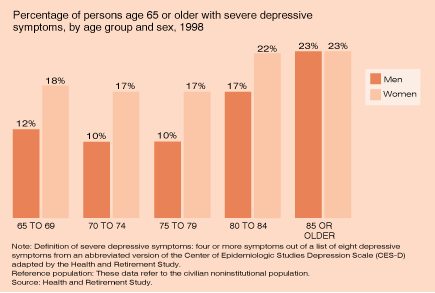 One final risk factor for RNT is gender. Women are much more likely to ruminate than men, specifically during depression. While it has been suggested that men are more likely to attempt to distract themselves during depression, this has not been substantially supported by the data, and would still be consistent with the maintenance theory; that is, ruminations may serve as a distraction from depressive symptoms. In addition to its particular applicability here, the higher risk for RNT in women may also explain the higher prevalence of depression in women than in men.
The reasons for expressing RNT are numerous, but this doesn't get to how to prevent it. As mentioned earlier, some researchers have suggested that intervention methods at an early age would be most effective, since RNT is persistent and can start to develop as early as preschool. This seems to be the most favoured approach, however what of individuals who suffer from RNT but are too old for intervention methods, or individuals who received intervention but still exhibit RNT? What can be done for them?
Working off the maintenance theory, cognitive avoidance strategies may have a paradoxical effect on RNT. Individuals who try to place emphasis on suppressing RNT and ruminations unintentionally place greater focus on the thoughts themselves, and make it harder to get rid of them. In addition, by increasing their likelihood of reoccurring or persisting, avoidance strategies have negative long-term consequences by decreasing the individuals experience in coping or dealing with RNT. This suggests that the best way to deal with RNT is not to suppress the thoughts, but reflect on them; and as ruminations are characterized by focusing on the consequences of certain events and actions, to try to "think positive," which is, of course, easier said than done.
Recent research suggests that sleep may be able to moderate RNT, and that RNT is associated with both timing of sleep and sleep duration. Individuals who go to bed later, or individuals who sleep less, are at higher risk for ruminations than individuals who go to bed earlier, or sleep longer. This association exists in both individuals with disorder-specific ruminations or from a transdiagnostic approach. While this may only suggest that individuals who suffer from RNT get less sleep or take longer to fall asleep, the opposite is just as likely to be true. This gives a lot of agency to all individuals who suffer from RNT, and is thus, in my view, a good approach to take to moderate ruminations.
Finally, it may be good to just talk about things; thinking and talking about persistent negative thoughts, in the right circumstances, can result in healthier individuals. Healthy self-disclosure can be beneficial to individuals suffering from RNT if their experiences sharing their feelings result in an increased understanding about the source of one's problems; in which case, I hope this article helps in itself. Individuals who disclose their feelings in the context of supportive relationships can experience growth and benefit in dealing with RNT and ruminations, and so confession can be a viable option for individuals suffering from them.
More research needs to be conducted concerning the causes of RNT; however, multiple associations have been made, and some of the ones discussed in this article are quite rigorous in nature. Multifaceted approaches in examining the causes of RNT may help reconcile for the differences between disorder-specific research and transdiagnostic approaches. This can help us better understand the nature of this affliction and improve our resources in knowing how to deal with or prevent them, so as to develop the onset of depression and other mood/stress disorders as well as promote healthier, happier individuals.
Thank you all very much for reading.
Follow me on social media!
Twitter: https://twitter.com/AlexisDelanoir
Google+: https://plus.google.com/+AlexisDelanoir0/
YouTube: https://www.youtube.com/AlexisDelanoir
Sources:
Clasen, P., Wells, T., Knopik, V., McGeary, J., & Beevers, C. (2011). 5-HTTLPR and BDNF Val66Met polymorphisms moderate effects of stress on rumination. Genes, Brain and Behavior, 10 (7), 740-746 DOI: 10.1111/j.1601-183X.2011.00715.x
Cox, S., Mezulis, A., & Hyde, J. (2010). The influence of child gender role and maternal feedback to child stress on the emergence of the gender difference in depressive rumination in adolescence. Developmental Psychology, 46 (4), 842-852 DOI: 10.1037/a0019813
Ehring, T., & Watkins, E. (2008). Repetitive Negative Thinking as a Transdiagnostic Process. International Journal of Cognitive Therapy, 1 (3), 192-205 DOI: 10.1680/ijct.2008.1.3.192
Freeston, M., Ladouceur, R., Provencher, M., & Blais, F. (1995). Strategies used with intrusive thoughts: Context, appraisal, mood, and efficacy. Journal of Anxiety Disorders, 9 (3), 201-215 DOI: 10.1016/0887-6185(95)00002-6
Gibb, B., Grassia, M., Stone, L., Uhrlass, D., & McGeary, J. (2011). Brooding Rumination and Risk for Depressive Disorders in Children of Depressed Mothers. Journal of Abnormal Child Psychology, 40 (2), 317-326 DOI: 10.1007/s10802-011-9554-y
Hilt, L., Armstrong, J., & Essex, M. (2012). Early family context and development of adolescent ruminative style: Moderation by temperament. Cognition & Emotion, 26 (5), 916-926 DOI: 10.1080/02699931.2011.621932
KOVACS, M., SHERRILL, J., GEORGE, C., POLLOCK, M., TUMULURU, R., & HO, V. (2006). Contextual Emotion-Regulation Therapy for Childhood Depression: Description and Pilot Testing of a New Intervention. Journal of the American Academy of Child & Adolescent Psychiatry, 45 (8), 892-903 DOI: 10.1097/01.chi.0000222878.74162.5a
McEvoy, P., Watson, H., Watkins, E., & Nathan, P. (2013). The relationship between worry, rumination, and comorbidity: Evidence for repetitive negative thinking as a transdiagnostic construct. Journal of Affective Disorders, 151 (1), 313-320 DOI: 10.1016/j.jad.2013.06.014
Nolen-Hoeksema, S. (1991). Responses to depression and their effects on the duration of depressive episodes. Journal of Abnormal Psychology, 100 (4), 569-582 DOI: 10.1037//0021-843X.100.4.569
Nolen-Hoeksema, S., Stice, E., Wade, E., & Bohon, C. (2007). Reciprocal relations between rumination and bulimic, substance abuse, and depressive symptoms in female adolescents. Journal of Abnormal Psychology, 116 (1), 198-207 DOI: 10.1037/0021-843X.116.1.198
Nota, J., & Coles, M. (2014). Duration and Timing of Sleep are Associated with Repetitive Negative Thinking. Cognitive Therapy and Research DOI: 10.1007/s10608-014-9651-7
Strauss, J., Muday, T., McNall, K., & Wong, M. (1997). Response Style Theory Revisited: Gender Differences and Stereotypes in Rumination and Distraction. Sex Roles, 36 (11/12), 771-792 DOI: 10.1023/A:1025679223514
Watkins, E. (2008). Constructive and unconstructive repetitive thought. Psychological Bulletin, 134 (2), 163-206 DOI: 10.1037/0033-2909.134.2.163
 |
| Not always in snippets like this, but just as cluttering. |
While most people would just describe this as a general descriptor of how they feel or what they're going through, it's actually a clinically significant term that lends a lot of research in the field of psychology. RNT is defined as abstract, perseverative, negative focus on one's problems and experiences that is difficult to control. RNT has been found to prolong negative affect, or the character trait of having negative emotions, and impair cognitive, behavioural and interpersonal performance. Individuals who suffer from RNT usually develop it during adolescence, after which it becomes difficult to stop. This is very important for clinical purposes, as it informs the priorities in intervention and prevention of RNT.
RNT has been associated with numerous stress and mood disorders, including generalized anxiety disorder (GAD), major depressive disorder (MDD), post-traumatic stress disorder (PTSD) and social anxiety disorder. While repetitive thought (RT) is generalized and can have either positive or negative consequences, RNT can be reliably distinguished from other RTs such as obsession or functional repetitious thoughts, thus many have supported it as a transdiagnostic process. This implies that it is of clinical and theoretical significance and interest, and has led many researchers to consider causes or risk factors for RNT, but the research is still open, one reason being that researchers do not always approach RNT from the same perspective or measurement. In this post, I would like to address primarily the risk factors for RNT and its similar descriptor, ruminations, and possible preventative measures or cures. The reason for this is while RNT is symptomatic of individuals with mood or stress disorders, it is also in itself a risk factor for those disorders, and so treating it as early as possible can be crucial for childhood development and adolescence.
Another risk factor is being the child of a depressed mother. Children of mothers who have a history of major depression are at higher risk for ruminations than children with mothers who have no such history. This also coincides with prior research which shows that children of mothers with depression are 3-4 times more likely to be diagnosed with depression as well. In addition, children who have past histories of depressive episodes and ruminations are more likely to exhibit such behaviours currently than those who have no such history. The nature of these relationships has been suggested as environmental in nature, as the study at the beginning of this paragraph suggests, or genetic. The most popular explanation for the latter association is responsive, meaning that how you respond to your own depressive behaviours can have prolonging effects.
The genetic explanation is not without evidence, though, in a general sense. Research has examined the relationship between the serotonin transporter polymorphism 5-HTTLPR, the brain-deprived neurotropic factor polymorphism BDNF Val66Met, and ruminations. Individuals with two short alleles of the 5-HTTLPR polymorphism or two Met alleles of the BDNF Val66Met polymorphism have been shown to ruminate more under conditions of life stress than those with other genotypes. Furthermore, accumulation of these risk alleles across genes is associated with higher levels of rumination. This suggests that these two polymorphisms moderate the relationship between life stress and ruminations.
The reasons for expressing RNT are numerous, but this doesn't get to how to prevent it. As mentioned earlier, some researchers have suggested that intervention methods at an early age would be most effective, since RNT is persistent and can start to develop as early as preschool. This seems to be the most favoured approach, however what of individuals who suffer from RNT but are too old for intervention methods, or individuals who received intervention but still exhibit RNT? What can be done for them?
Working off the maintenance theory, cognitive avoidance strategies may have a paradoxical effect on RNT. Individuals who try to place emphasis on suppressing RNT and ruminations unintentionally place greater focus on the thoughts themselves, and make it harder to get rid of them. In addition, by increasing their likelihood of reoccurring or persisting, avoidance strategies have negative long-term consequences by decreasing the individuals experience in coping or dealing with RNT. This suggests that the best way to deal with RNT is not to suppress the thoughts, but reflect on them; and as ruminations are characterized by focusing on the consequences of certain events and actions, to try to "think positive," which is, of course, easier said than done.
 |
| Or, you could just look at this... |
Finally, it may be good to just talk about things; thinking and talking about persistent negative thoughts, in the right circumstances, can result in healthier individuals. Healthy self-disclosure can be beneficial to individuals suffering from RNT if their experiences sharing their feelings result in an increased understanding about the source of one's problems; in which case, I hope this article helps in itself. Individuals who disclose their feelings in the context of supportive relationships can experience growth and benefit in dealing with RNT and ruminations, and so confession can be a viable option for individuals suffering from them.
More research needs to be conducted concerning the causes of RNT; however, multiple associations have been made, and some of the ones discussed in this article are quite rigorous in nature. Multifaceted approaches in examining the causes of RNT may help reconcile for the differences between disorder-specific research and transdiagnostic approaches. This can help us better understand the nature of this affliction and improve our resources in knowing how to deal with or prevent them, so as to develop the onset of depression and other mood/stress disorders as well as promote healthier, happier individuals.
Thank you all very much for reading.
Follow me on social media!
Twitter: https://twitter.com/AlexisDelanoir
Google+: https://plus.google.com/+AlexisDelanoir0/
YouTube: https://www.youtube.com/AlexisDelanoir
Sources:Clasen, P., Wells, T., Knopik, V., McGeary, J., & Beevers, C. (2011). 5-HTTLPR and BDNF Val66Met polymorphisms moderate effects of stress on rumination. Genes, Brain and Behavior, 10 (7), 740-746 DOI: 10.1111/j.1601-183X.2011.00715.x
Cox, S., Mezulis, A., & Hyde, J. (2010). The influence of child gender role and maternal feedback to child stress on the emergence of the gender difference in depressive rumination in adolescence. Developmental Psychology, 46 (4), 842-852 DOI: 10.1037/a0019813
Ehring, T., & Watkins, E. (2008). Repetitive Negative Thinking as a Transdiagnostic Process. International Journal of Cognitive Therapy, 1 (3), 192-205 DOI: 10.1680/ijct.2008.1.3.192
Freeston, M., Ladouceur, R., Provencher, M., & Blais, F. (1995). Strategies used with intrusive thoughts: Context, appraisal, mood, and efficacy. Journal of Anxiety Disorders, 9 (3), 201-215 DOI: 10.1016/0887-6185(95)00002-6
Gibb, B., Grassia, M., Stone, L., Uhrlass, D., & McGeary, J. (2011). Brooding Rumination and Risk for Depressive Disorders in Children of Depressed Mothers. Journal of Abnormal Child Psychology, 40 (2), 317-326 DOI: 10.1007/s10802-011-9554-y
Hilt, L., Armstrong, J., & Essex, M. (2012). Early family context and development of adolescent ruminative style: Moderation by temperament. Cognition & Emotion, 26 (5), 916-926 DOI: 10.1080/02699931.2011.621932
KOVACS, M., SHERRILL, J., GEORGE, C., POLLOCK, M., TUMULURU, R., & HO, V. (2006). Contextual Emotion-Regulation Therapy for Childhood Depression: Description and Pilot Testing of a New Intervention. Journal of the American Academy of Child & Adolescent Psychiatry, 45 (8), 892-903 DOI: 10.1097/01.chi.0000222878.74162.5a
McEvoy, P., Watson, H., Watkins, E., & Nathan, P. (2013). The relationship between worry, rumination, and comorbidity: Evidence for repetitive negative thinking as a transdiagnostic construct. Journal of Affective Disorders, 151 (1), 313-320 DOI: 10.1016/j.jad.2013.06.014
Nolen-Hoeksema, S. (1991). Responses to depression and their effects on the duration of depressive episodes. Journal of Abnormal Psychology, 100 (4), 569-582 DOI: 10.1037//0021-843X.100.4.569
Nolen-Hoeksema, S., Stice, E., Wade, E., & Bohon, C. (2007). Reciprocal relations between rumination and bulimic, substance abuse, and depressive symptoms in female adolescents. Journal of Abnormal Psychology, 116 (1), 198-207 DOI: 10.1037/0021-843X.116.1.198
Nota, J., & Coles, M. (2014). Duration and Timing of Sleep are Associated with Repetitive Negative Thinking. Cognitive Therapy and Research DOI: 10.1007/s10608-014-9651-7
Strauss, J., Muday, T., McNall, K., & Wong, M. (1997). Response Style Theory Revisited: Gender Differences and Stereotypes in Rumination and Distraction. Sex Roles, 36 (11/12), 771-792 DOI: 10.1023/A:1025679223514
Watkins, E. (2008). Constructive and unconstructive repetitive thought. Psychological Bulletin, 134 (2), 163-206 DOI: 10.1037/0033-2909.134.2.163
Saturday, December 6, 2014
RE: How to Paint Yourself Into A Corner on Race Realism -- A Reflection
This evening, Spawktalk, who goes by the name of Sean Last for The Right Stuff (TRS), wrote a rebuttal to my first post on the topic of race, "Lewontin's Fallacy" and Race. As I explained in the comments on his article, I've opted not to reply for a multitude of reasons, but am still interested in writing a reflection on the discussion we had. First, though, I want to talk about my experiences reading the article first.
Having been familiar with the kind of articles TRS produces, I was honestly a bit nervous. They're typically, even as Sean admitted, quite inflammatory and hostile, especially towards liberals (which, I suppose, is what they might see me as, though I'd disagree). I was surprised to find that the only things that caused my brow to furrow while reading his article were the title (which Michael Enoch admitted was not Sean's doing) and the subtexts under the pictures (which were funnier than they were offensive). It was a pleasant surprise, although it really shouldn't have been. My exchange with Sean was quite friendly, and so I shouldn't have suspected his rebuttal to be much different.
The comments were even more surprising, at least initially. My experiences on TRS have told me that the commenters can and will be very vicious in their responses, and can quickly reject any type of reasoned discussion in exchange for aggression and toxicity. This was by far not the case tonight. The commenters were friendly, gracious, and quite nice to speak to. As one commenter expressed, it was a real breath of fresh air. As I said there as well, there's no reason that people of different views can't have a friendly discussion. While this was initially the case, now the comments seem to have devolved into the typical exchange I'd expect there. It's a shame, but what can you do?
To reflect on the discussion itself, it was quite enjoyable. Sean brought up some interesting points, and there were moments where I had to concede to his arguments, and ultimately I took away some new perspectives; namely how race realists typically define "race." To Sean, race does retain a degree of arbitration, and it is only one of a multiplicity of ways in which someone can examine human genetic variation. I came to realize this isn't entirely inconsistent with my own views; the conclusions we draw, however, regarding the significance of racial categories, or whether or not those categories are objective or biological in nature, is what we ended up having to agree to disagree on.
A lot of the points in the article seemed to be things I've addressed already, either in response to commenters or in sections of my other posts on the topic. Sean and I do fundamentally disagree on one factor which I think is important to bring up. Say, for example, that the social ramifications of racial categories is what has caused group differentials in IQ. To Sean, this is still a validation of race as a human taxonomy. To me, this is evidence of social construction, specifically not of biological validation. I don't see us reconciling this difference in interpretation, but I think it's interesting to note the stark contrast between the conclusions we drew from the same point. It just further shows the complication behind this subject.
Sean also brought up a point about the AAA, AAPA and HGP's definitions of race, and how they are problematic given race realists' definition of race. I absolutely agree, and I emailed the AAA on their article expressing my concerns. I've yet to receive a reply, and so I hope others will ask too, demanding a higher priority on the question. At the same time, Sean and I disagree on our trust in these organizations. I trust the consensus view of anthropologists while Sean is cynical of them. While I believe that these organizations have a much greater advantage in terms of access to scientific literature regarding the subject, Sean believes our access is comparable to theirs. Again, I suppose we'll have to agree to disagree on these points.
I don't think that Sean fully understands what I mean when I talk about the social or cultural construction of race, and so I'll clarify my views here. When one speaks about the social construction of race, we are drawing attention to its origins, its modern usage, and its social ramifications. One could argue that all things are socially constructed, but this is usually very uninformative. For example, we can talk about the social construction of a hammer; however, hammers were explicitly invented by humans, and so we naturally define what it is and what qualifies as a hammer. We could also talk about the social construction of grass, but this has a pretty universal consensus. Having said all of that, I do not believe that "race" as a general taxonomy is overwhelmingly a social construct. When I say that race is a social construct, I mean that our decision as to what groups of humans qualify as different races is socially constructed; that is, the classification itself is not overwhelmingly a social construct, but what people we choose to put into that classification (for humans, anyway) is. Another way to put it: race is "a culturally constructed label that crudely and imprecisely describes real variation" (Relethford 2009). I love that quote.
If I think of anything else to say about our exchange, I'll just keep adding it onto this post. All in all, I enjoyed the past two months of discussion over this topic, though there were major time gaps between our replies. I think that Sean puts a lot of thought into the responses he makes, and as I stated on his article, I greatly respect his intellect and passion for the subject. He seems to be, to me, an intellectually honest person, and I hope that he dedicates his time and effort to a related field of study later on in his career. While I personally believe racial categorization is problematic and mostly uninformative, there is no reason to stop someone who disagrees from contributing to the academic discussion over this issue. Our disagreement is based on our experiences, and so a shared experience in the future might bring us and like-minded individuals closer to an agreement.
Thank you all very much for reading.
Having been familiar with the kind of articles TRS produces, I was honestly a bit nervous. They're typically, even as Sean admitted, quite inflammatory and hostile, especially towards liberals (which, I suppose, is what they might see me as, though I'd disagree). I was surprised to find that the only things that caused my brow to furrow while reading his article were the title (which Michael Enoch admitted was not Sean's doing) and the subtexts under the pictures (which were funnier than they were offensive). It was a pleasant surprise, although it really shouldn't have been. My exchange with Sean was quite friendly, and so I shouldn't have suspected his rebuttal to be much different.
The comments were even more surprising, at least initially. My experiences on TRS have told me that the commenters can and will be very vicious in their responses, and can quickly reject any type of reasoned discussion in exchange for aggression and toxicity. This was by far not the case tonight. The commenters were friendly, gracious, and quite nice to speak to. As one commenter expressed, it was a real breath of fresh air. As I said there as well, there's no reason that people of different views can't have a friendly discussion. While this was initially the case, now the comments seem to have devolved into the typical exchange I'd expect there. It's a shame, but what can you do?
To reflect on the discussion itself, it was quite enjoyable. Sean brought up some interesting points, and there were moments where I had to concede to his arguments, and ultimately I took away some new perspectives; namely how race realists typically define "race." To Sean, race does retain a degree of arbitration, and it is only one of a multiplicity of ways in which someone can examine human genetic variation. I came to realize this isn't entirely inconsistent with my own views; the conclusions we draw, however, regarding the significance of racial categories, or whether or not those categories are objective or biological in nature, is what we ended up having to agree to disagree on.
A lot of the points in the article seemed to be things I've addressed already, either in response to commenters or in sections of my other posts on the topic. Sean and I do fundamentally disagree on one factor which I think is important to bring up. Say, for example, that the social ramifications of racial categories is what has caused group differentials in IQ. To Sean, this is still a validation of race as a human taxonomy. To me, this is evidence of social construction, specifically not of biological validation. I don't see us reconciling this difference in interpretation, but I think it's interesting to note the stark contrast between the conclusions we drew from the same point. It just further shows the complication behind this subject.
Sean also brought up a point about the AAA, AAPA and HGP's definitions of race, and how they are problematic given race realists' definition of race. I absolutely agree, and I emailed the AAA on their article expressing my concerns. I've yet to receive a reply, and so I hope others will ask too, demanding a higher priority on the question. At the same time, Sean and I disagree on our trust in these organizations. I trust the consensus view of anthropologists while Sean is cynical of them. While I believe that these organizations have a much greater advantage in terms of access to scientific literature regarding the subject, Sean believes our access is comparable to theirs. Again, I suppose we'll have to agree to disagree on these points.
I don't think that Sean fully understands what I mean when I talk about the social or cultural construction of race, and so I'll clarify my views here. When one speaks about the social construction of race, we are drawing attention to its origins, its modern usage, and its social ramifications. One could argue that all things are socially constructed, but this is usually very uninformative. For example, we can talk about the social construction of a hammer; however, hammers were explicitly invented by humans, and so we naturally define what it is and what qualifies as a hammer. We could also talk about the social construction of grass, but this has a pretty universal consensus. Having said all of that, I do not believe that "race" as a general taxonomy is overwhelmingly a social construct. When I say that race is a social construct, I mean that our decision as to what groups of humans qualify as different races is socially constructed; that is, the classification itself is not overwhelmingly a social construct, but what people we choose to put into that classification (for humans, anyway) is. Another way to put it: race is "a culturally constructed label that crudely and imprecisely describes real variation" (Relethford 2009). I love that quote.
If I think of anything else to say about our exchange, I'll just keep adding it onto this post. All in all, I enjoyed the past two months of discussion over this topic, though there were major time gaps between our replies. I think that Sean puts a lot of thought into the responses he makes, and as I stated on his article, I greatly respect his intellect and passion for the subject. He seems to be, to me, an intellectually honest person, and I hope that he dedicates his time and effort to a related field of study later on in his career. While I personally believe racial categorization is problematic and mostly uninformative, there is no reason to stop someone who disagrees from contributing to the academic discussion over this issue. Our disagreement is based on our experiences, and so a shared experience in the future might bring us and like-minded individuals closer to an agreement.
Thank you all very much for reading.
Subscribe to:
Posts (Atom)