In the shadows of the internet and in the light of my hiatus, my focus in terms of what political issues I follow has narrowed its way down to two topics: atheism and feminism. I, without hesitance, identify myself as an agnostic atheist, because it is a statement of my belief and my method of arriving at that belief, rather than my personal philosophy and political views.
Feminism is much different. Feminism carries this air of uncertainty, and can be misconstrued in many ways; and in my opinion, it just seems to be a pointless moniker when "gender equality" is not so ambiguous, and is preferable in every way for the sake of clarity. That being said, while I don't identify myself as a feminist, many of my views can be seen as aligning with the feminist movement.
I make strong statements on my blog, and in some cases, it's very easy
to tell under what banner I might be standing when an all out war of
religion/politics/race rises out of the murky shadows of humanity's
contempt for one another. But above any potential alignment with any political or social movement in existence, there is one identity that blankets my soul greater than anything else; and it is, from the perspective of my infinite
wisdom, a force so
powerful that only the most
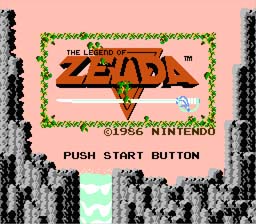
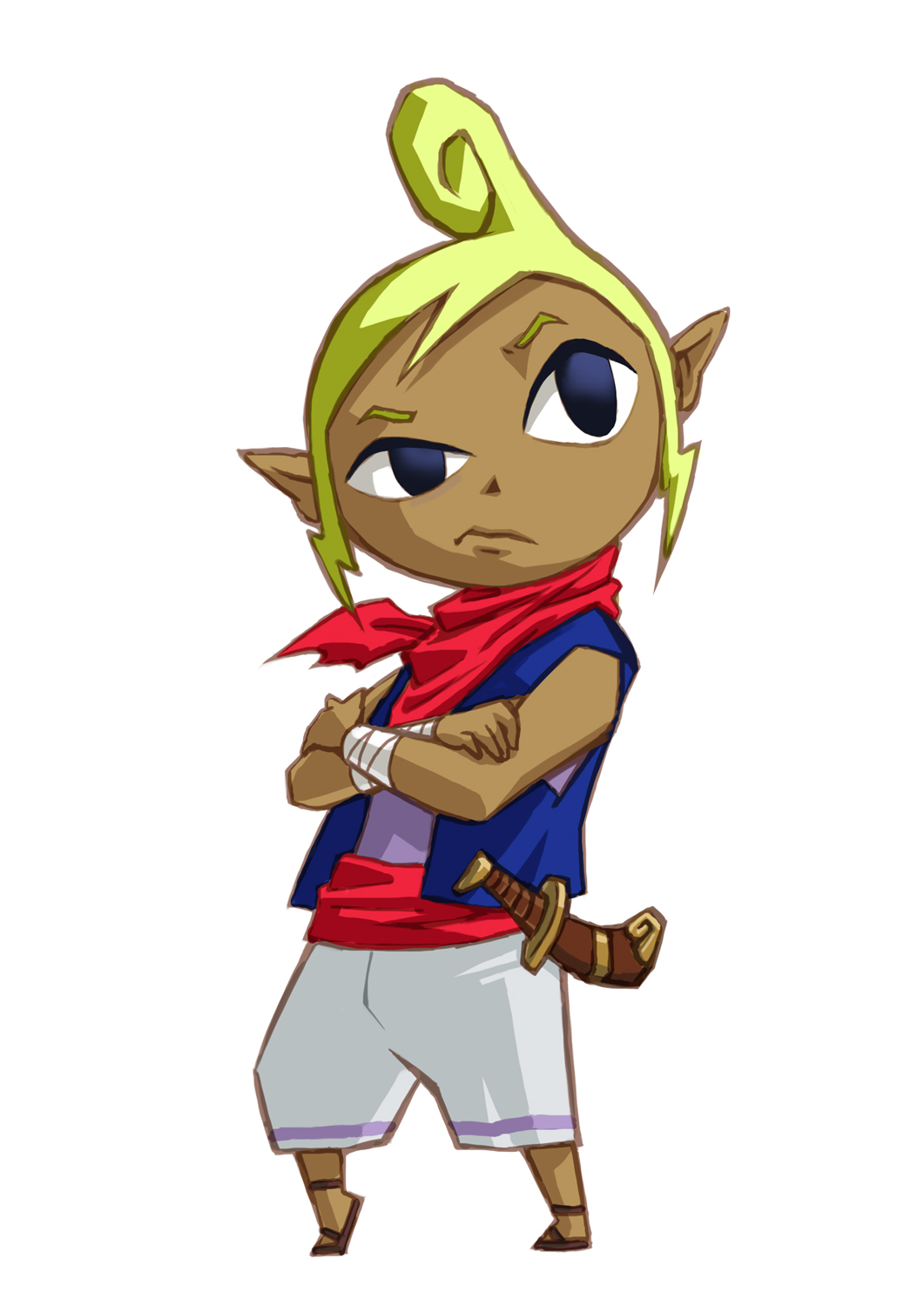
courageous of heroes could vanquish it. For those of you who are video game fans, hardcore or casual, you know exactly what I'm referring to.
 |
| Oh the pleasant, socially uninformed memories. |
In August of 1993, The Legend of Zelda: Link's Awakening was released in North America -- and I was born -- setting my fate as a diehard Zelda fan beyond all else; although the first Zelda game I ever played was, well, the first one. If we count all gameplay totals, then weeks, maybe months of my life have been invested in playing every Zelda game that has reached the market; but this doesn't even come close to counting the extra steps I've taken in dedicating myself to the Zelda franchise, to the point that I have, in my possession, at least four copies of Hyrule Historia (in unique formats), made unnecessary investments such as converting my Zelda games on the Famicom (because who doesn't love imports?), learned how to ride on horseback, and much more. The only thing that's left is a cosplay, which my friends have been begging me to do, but that's not what my interest is. My personal investment is in the story, the content, not my derivations of such. I don't write fan fictions, for example -- I appreciate the original story with all my heart.
So when the scope of feminism decided to encroach upon the Legend of Zelda, you can imagine how much I was frothing at the mouth, sharpening my claws and teeth, preparing to rip apart the leader of the crusade on what has to be my most favorite video game franchise of all time... My paleo-instincts targeted none other than Anita Sarkeesian.
Anita Sarkeesian is a feminist, media critic and blogger, author of
Feminist Frequency, which seeks to deconstruct the portrayals of women in video games and other media using feminist philosophy. Just this year, she was awarded the 14th annual Game Developers Choice Awards, and was nominated for Microsoft's 2014 Women in Gaming Awards. Her work has been widely praised for allegedly standing up to the virulent misogyny of popular media through her 'critical analysis.' She has become, for all intents and purposes, the poster woman of feminism in media and gaming, and many people have bought into the dissemination of her 'analyses.'
How duped they have been.
 |
| Anita Sarkeesian |
I have no issues, personally, with Anita Sarkeesian. She seems to be genuinely trying to do what she thinks is right, and I have no issues with strong minded women vocalizing themselves. With all this in mind, I think Ms. Sarkeesian has gone beyond the reaches of the good she could have done, and is now bringing a bad name to the feminist movement she is a representative of. Her work inspires people to think more critically about what they see in media, but on a case-by-case basis, her analyses are very uninformative, and sometimes just seem downright crazy.
But it would take forever to look at everything she's ever said, and honestly, I've never had any desire to. However, the moment she hammers a nail into the Legend of Zelda and says "this is what I want to look at," oh boy do the gloves come off, and the stilettos on. This is actually over a year late, but if you want to find where all of this is coming from, refer to her first episode of "Damsel in Distress." Now, without further ado, let's begin.
In her first criticisms, Ms. Sarkeesian notes that in every game in the series, Zelda has been kidnapped, possessed, turned to stone, or otherwise been taken advantage of/incapacitated, hence her "damsel in distress" role. Of course, the reason behind this is explained in much detail, both throughout the games, and in the external sources of information. Simply put, whoever the goddesses decide will possess each piece of the Triforce, those people become destined to carry certain... destinies. The Triforce of Courage is bound to the hero of legend, who will always become one incarnation of Link. The Triforce of Wisdom is bound to the princess or queen who shall inherit the throne of Hyrule, who will always become one incarnation of Zelda. The Triforce of Power is bound to the man who will use his power to seek the entire Triforce, who will always become the reincarnation of Demise. These roles are revealed in many separate places in Hyrule Historia, most notably with the origins of the legend: the War of Hylia.
 |
| Ganondorf: AKA "Big Dick" |
But why, you would then ask, would Shigeru Miyamoto or Eiji Aonuma decide to make the "damsel in distress" the crux of the legend, or at least the games in the series? Why not change it? We'll get to that later: however, it should be noted that the person who is always the evil villain bent on ruling the world in the series, consistent with many other game series as well, is a man. Something for you to think about. For now, let's continue on with Ms. Sarkeesian's criticisms.
She continues on by stating that Zelda has always been in the role of either assistant or sidekick in the game series, and was only ever a crucial part of the story when she transforms into Sheik in Ocarina of Time, but is then captured by Ganondorf 3 minutes after she turns back into Zelda. Well, once again, this was explained.
In the events of Wind Waker, Ganondorf sends a gigantic bird across the Great Sea to hunt down girls told of in legend to possess the Triforce of Wisdom: blonde haired girls with pointy ears. This allows the bird to confuse the true identity of Zelda for many different characters, including two girls from Windfall Island and Link's own sister. The characters within the story are just as aware of the roles that the characters play as we are, because it is the legend of their own land, and Ganondorf seems to have been alive for many different games in the series to act on his own personal knowledge.
Thus, we can safely conclude that Zelda, being aware of the legend, since she's the daughter of the King of Hyrule, will also be aware of the legend, and therefore would have to disguise herself
not only as a Sheikah, but as a male Sheikah who does not reveal his long, flowing hair in order to prevent Ganondorf from accurately figuring out her identity. In fact, Ganondorf includes another telling fact about the situation in his kidnapping speech, but we'll get to that in a moment. Her disguise actually works, because even Princess Ruto confuses Sheik for a male. How do we know that Sheik, canonically, is supposed to be a female though? Because
Eiji Aonuma said so.
Now, for Ganondorf's telling fact. Ganondorf states, while kidnapping Zelda in Ocarina of Time, that if he followed Link, who he knew to be in possession of the Triforce of Courage, he would find the person who possessed the Triforce of Wisdom. The Triforce of Courage prevents Ganondorf from using his magic to kidnap the person wielding it, so instead he simply followed Link around until he found Zelda. That's why she was kidnapped immediately. Not because she revealed herself to be a woman, but because everyone was in full knowledge (except Link) that Zelda was in disguise specifically to protect herself from Ganondorf. If anything, once again, blame Ganondorf from being the stereotypical power hungry, sexist man that he is.
If you want to argue that despite the story solidly explaining why all of this happened, it sends a psychological message that associates feminine Zelda with "damsel in distress," then you need to talk to yourself and the people who think Zelda is an object, not Eiji.
She then goes on to criticize the Tetra/Zelda portrayal in the Wind Waker. Well... this one is a bit more telling of Ms. Sarkeesian's point of view than that of the game developers. To summarize, her issue with the Tetra/Zelda portrayal was that the moment Tetra transforms into Zelda, she's ordered to not accompany Link in his journey, and to stay in the temple in order to be safe. First of all, if you think about it in reality, I don't see what the issue is. Tetra and Zelda were the same person, both were female, it's just that when Tetra becomes the "more stereotypically feminine" Princess Zelda, she's ordered to stay behind. Up until that point, Zelda (who was then called Tetra) was fully capable of herself.
 |
| Tetra isn't feminine enough to be a woman! |
Wait... is she saying that Tetra isn't feminine enough to reconcile for that? Why does
she get to decide what femininity is? Isn't the whole point of the critical analysis of female portrayal supposed to be about deconstructing the idea of stereotypical femininity? What issues does she have with "tomboyish" Tetra, then? Just because her appearance didn't conform to the feminine appearance she would've
preferred Tetra to have? Just because Tetra wasn't "stereotypically femine?" Isn't that supposed to be a good thing? That the female isn't necessarily portrayed as a girly girl princess? I'm sorry, but
that's sexist, not the Zelda franchise.
I actually had my own criticisms of the Tetra/Zelda paradigm for my own reasons, that had more to deal with the color of her skin. What, white women can't be the heroes? Why did she have to lose that awesome tan?
(Mostly joking).
But beyond that, her criticism, within the realm of the story, is flawed for another reason. It was established that the moment Link pulled the Master Sword out of the pedestal, he granted Ganondorf his full potential -- all of his magic and evil powers came back. The temple was the
only safe place for anyone who wasn't impervious to Ganondorf's magic, and so Zelda was asked to stay there, but even that didn't work.
Zelda wasn't the only victim of this: 3 great spirits, a bunch of fairies, and hundreds of people across the Great Sea fell victim to Ganondorf's evil as well. And, as established before, Ganondorf was now fully aware of who Zelda/Tetra was, and so she had to stay on the DL in order to not get royally screwed. At least, that's what they thought it would accomplish. Turns out Ganondorf is still the stereotypical male asshole.
So, yes, Zelda and Tetra are the same person, and Tetra was fully capable of herself. As even Ms. Sarkeesian noted, Zelda/Tetra even helps you fight Ganondorf in the final battle. She even helps rescue you from Ganondorf's grasp earlier in the game when you pay your second visit to the Forsaken Fortress. Talk about a damsel in distress, huh?
Ms. Sarkeesian's last criticism of the franchise is of Zelda/Tetra's portrayal in Phantom Hourglass, where she's kidnapped, turned to stone, then kidnapped again, but to explain the reasons why this criticism is invalid would just be to repeat the points made vastly above. Later in the video, she says she wants Zelda to be the protagonist in a story, and even makes it a point of saying "and I'm not talking about the DS games. I'm talking about full on console adventures." In this statement, Ms. Sarkeesian has just expressed two sentiments:
1: That DS installments in the Zelda series are somehow lesser games than the console installments; and,
2: That she has no appreciation for Hyrule lore.
So now ignoring Spirit Tracks (and Wand of Gamelon if you want to include the CD-i games), #2 brings us back to that really irritating question: why don't they just change the legend so that Zelda isn't perpetually screwed and forced to be in this position?
Well, simply put, you're an asshole for suggesting that.
Eiji Aonuma has already made it crystal clear that he doesn't wish to establish Zelda as a damsel in distress, because he acknowledges that the fans prefer a female that's more helpful, engaging and involved, like Zelda was in Ocarina of Time or in Wind Waker (although I would strongly argue that she is a very powerful woman in almost all of the Zelda series). To ask him to
change his story otherwise is just beyond insensitive. As a writer, I can appreciate how much one can be invested in their own story. It can be their passion, even their life, and to have someone say "change this because I don't like it" can be the greatest insult to your person that anyone could ever offer.
 |
| I would fuck her. |
The story writers are not obligated to change their story just because social activists don't like it. They've already made an attempt to appease their fans, and beyond that, we should all be excited for the upcoming Hyrule Warriors, where we get to play as Zelda and see how fully capable she is of kicking ass in her princess getup (actually, even better: Zelda in Hyrule Warriors is a queen). We also got to see that in Super Smash Bros. To ask them to change the entire foundation of the story, to change the legend, and to make all of the events of the previous games
totally worthless is just unappealing for everybody.
But then it begs the question: why was Zelda the damsel in distress in the first place? Why did they decide that was a thing?
Honestly, that would be the best argument you could go for. Somehow, this whole idea that the depiction of Zelda in the games is sending us messages that she's useless isn't settling with me, because I can see how, in so many games, she has shown herself to be
probably more powerful than Link, all things considered.
Consider how she kind of saved Midna's life using magic in Twilight Princess, and how she could teleport and render Ganon incapacitated in Ocarina of Time, or how she was actually a goddess in Skyward Sword. Also consider how in all of these games, Link needed some kind of
assistant (Navi, Tatl, Fi, Ezlo, King of Red Lions, etc.), while Zelda often found herself without needing one, even when she was on her own. For goodness sake, she was the captain of a pirate crew and could kick grown ass men around in Wind Waker, despite her small stature.
The only thing you can really go for would be "why did they make this the story at the very, very beginning?" To criticize the game's repetitive nature thereafter is pointless, and to criticize the fact that the game writers haven't changed the lore to accommodate your needs is just plain insulting.
 |
| NEEDS MORE/LESS FEMININITY! |
I think it was important to go through this for a few reasons, but the biggest thing is that it can be applied to
many stories. Even when the female isn't being portrayed as the Damsel in Distress, Anita Sarkeesian will almost always have some kind of criticism of their depiction, such as Samus in the Metroid series. There is no winning play. There's always going to be something wrong. What we have to keep in mind while looking at these things is that, despite how some people may
perceive the characters in the story, the fact remains that the story writers have sole agency in deciding what happens, and in most cases, they're willing to appeal to their fan base.
But at what point did we decide that it was okay to tell story writers what they can and can't do? Asking them to completely tear apart the foundations of their story and readjust the well-established, consistent lore, thereby making every single preceding game absolutely pointless in terms of the plot, simply to accommodate for your preferences is just, in my opinion, a disgusting insult, both as a writer and as a gamer.
Thank you all very much for reading.
Follow me on social media!
Twitter: https://twitter.com/AlexisDelanoir
Google+: https://plus.google.com/+AlexisDelanoir0/
YouTube: https://www.youtube.com/AlexisDelanoir
EDIT:
I've decided that the comments I've received have produced a lot of strong arguments in defense of the Legend of Zelda series, so whenever I receive one that I think is good, or come up with another on my own, I'll include it in the list below. These will mostly not be direct responses to the contentions brought up by Anita Sarkeesian, but instead will simply extract information from Zelda lore in defense of the series as a whole.
Extra arguments:
- The Triforce of Wisdom is always granted to Zelda, symbolizing the female role as being mentally strong. (Courtesy of Nick T.)
- The name "Zelda" comes from the Teutonic word for "gray haired battle maiden," i.e. a female warrior. (Courtesy of Nick T.)
- "Princess Zelda" is not legitimized by being married to a prince, but instead is a single, female matriarch, even when she gains the status of "Queen." (Courtesy of Nick T.)
- The Gerudo race is made up entirely of warrior women, with the exception of a single male born every 100 years, who are able to survive despite the harsh environment that is the Gerudo Valley -- a place that is so horrific and deadly that even Ganondorf himself was envious of the land of Hyrule for that reason, thus is his motivation (explained in Wind Waker). (Courtesy of Nick C.)
- While the most powerful being in the land -- the one who holds the Triforce of Power -- is the reincarnation of Demise, every other powerful being in the game (the Great Fairies and the Golden Goddesses) are females; in fact, Din is the one who grants the Triforce of Power to whomever it goes to in the first place. This goes for all pieces of the Triforce as well. These powers are contingent on the decisions of women.
- Almost all of the main villains (Ganondorf, Demise, Vaati, Yuga, Ghirahim, Zant, etc.) are depicted as men. (Courtesy of Termina Knight)
- The seven sages in A Link to the Past were women, while five out of seven of them in Ocarina of Time were also women. (Courtesy of Termina Knight)
- At Lon Lon Ranch, there are only three people: Malon, Talon, and Ingo (Ocarina of Time). Talon runs the farm, but is found asleep in two separate scenarios, neglecting his deliveries. Ingo is the farmhand who exiles Talon and usurps control over the farm in order to appease Ganondorf. Malon, the only female, is kindhearted, helpful, and attentive. (Courtesy of Termina Knight)
- In Skyward Sword, in Zelda's speech to Link, it's revealed that Hylia had been manipulating Link's care for Zelda in order to have him follow her and to fulfill their destinies. Zelda was never in any danger, as she had Impa to protect her (powerful woman), but Link didn't know this. Even Zelda says "I used you," showing that the "damsel in distress" was never really in distress, but was actually (well, her goddess identity was) manipulating the protagonist. (Courtesy of Anonymous -- 7/25)
 Bandit Video is a mom and pop shop that buys/sells/trades video games and movies. They're located literally right down the street from this Gamestop: probably a 5 minute walk away. It was clear, then, that somebody had bought a copy of Punch-Out!! from Bandit for $14, then sold it back to Gamestop for the $0.30 that Gamestop tickles your belly button with for used games, and then Gamestop put it back on the shelf without taking the sticker off. But it was still listed for $14, right? And it was even in the "HOT DEALS!" case, so we figured it would behoove us to ask the employee there how much it was being sold for.